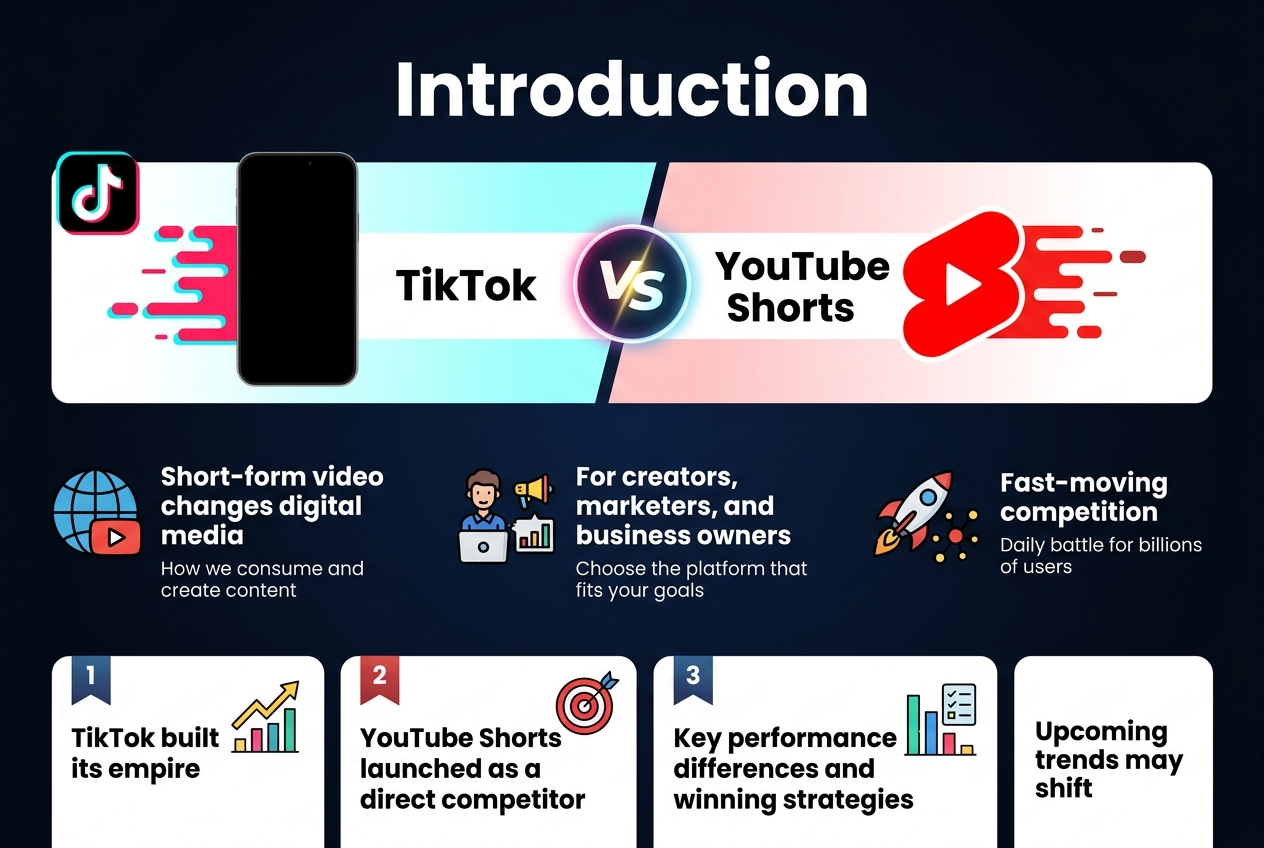
Short-form video content has completely changed how we consume and create digital media. TikTok vs YouTube Shorts represents the biggest battle in social media today, with billions of users choosing between these platforms daily.
This guide is for content creators, marketers, and business owners who want to understand which platform delivers better results for their goals. You’ll discover how TikTok built its empire and why YouTube Shorts launched as a direct competitor.
We’ll break down the key performance differences between these platforms and show you proven strategies that work on each one. You’ll also get insights into upcoming trends that could shift the entire short-form landscape in the next few years.
Understanding the Short-Form Content Revolution
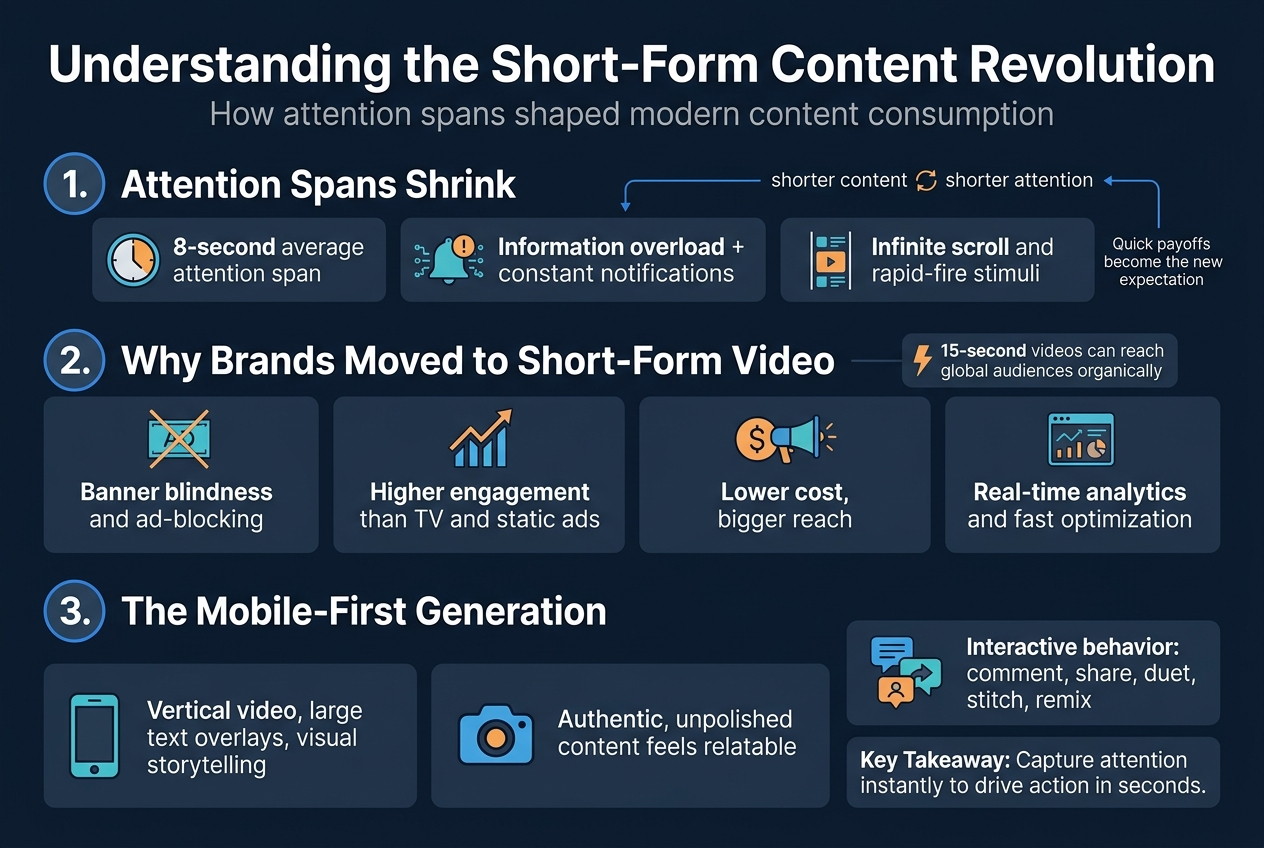
How attention spans shaped modern content consumption
Digital consumption habits have fundamentally changed over the past decade, with the average human attention span dropping to just 8 seconds according to Microsoft research. This dramatic shift didn’t happen overnight – it’s the result of information overload, constant notifications, and the brain’s adaptation to rapid-fire digital stimuli.
Social media platforms recognized this behavioral change and began optimizing their algorithms to match our shrinking focus windows. Users started favoring quick, digestible content that delivers instant gratification rather than lengthy videos or articles. The rise of infinite scroll features trained audiences to expect continuous, bite-sized entertainment that keeps dopamine levels elevated.
Content creators responded by condensing their messages into increasingly shorter formats. What once required a 10-minute tutorial now gets compressed into 60 seconds or less. This compression forced creators to master the art of hook-heavy openings, rapid-fire information delivery, and visual storytelling techniques that capture attention within the first three seconds.
The psychological impact goes deeper than simple preference – short-form content literally rewires how we process information. Our brains now expect quick payoffs and struggle with slower-paced content that requires sustained attention. This creates a feedback loop where platforms continue shortening content to match ever-decreasing attention spans.
Why brands shifted marketing budgets to bite-sized videos
Traditional advertising methods became increasingly ineffective as consumers developed banner blindness and ad-blocking behaviors. Brands watched their expensive 30-second TV commercials and static social media ads generate diminishing returns while short-form video content achieved unprecedented engagement rates.
The cost-effectiveness of short-form content proved irresistible to marketing departments. A single TikTok video could generate millions of views for a fraction of what brands spent on television advertising. User-generated content campaigns allowed brands to leverage authentic creator voices rather than expensive production teams and celebrity endorsements.
Short-form videos also provided measurable, real-time analytics that traditional advertising couldn’t match. Brands could track exact engagement metrics, audience demographics, and conversion rates instantly. This data-driven approach allowed for rapid campaign adjustments and optimization that maximized return on investment.
The viral potential of short-form content created opportunities for massive brand exposure that traditional advertising rarely achieved. A well-crafted 15-second video could reach global audiences organically, generating brand awareness worth millions in traditional advertising spend. This democratization of viral marketing leveled the playing field between small startups and major corporations.
The mobile-first generation’s content preferences
Generation Z and younger millennials consume content primarily through mobile devices, fundamentally altering content design principles. Vertical video formats, large text overlays, and visual storytelling techniques emerged specifically to optimize the mobile viewing experience.
These digital natives prefer authentic, unpolished content over highly produced advertisements. They gravitate toward creators who feel like peers rather than distant celebrities, seeking relatability and genuine connection through their content consumption. This preference drove the success of platforms prioritizing amateur creators over professional media companies.
Mobile consumption patterns favor content designed for multitasking scenarios – videos with clear visual cues that remain engaging even with sound off, content that delivers value quickly without requiring full attention, and formats easily shareable across multiple platforms.
The mobile-first generation expects interactive elements and immediate response capabilities. They want to comment, share, duet, stitch, and remix content instantly. Passive consumption feels outdated compared to participatory content experiences that allow them to become part of the creative process rather than just observers.
TikTok’s Dominance in the Short-Form Arena
Algorithm Mastery That Keeps Users Scrolling
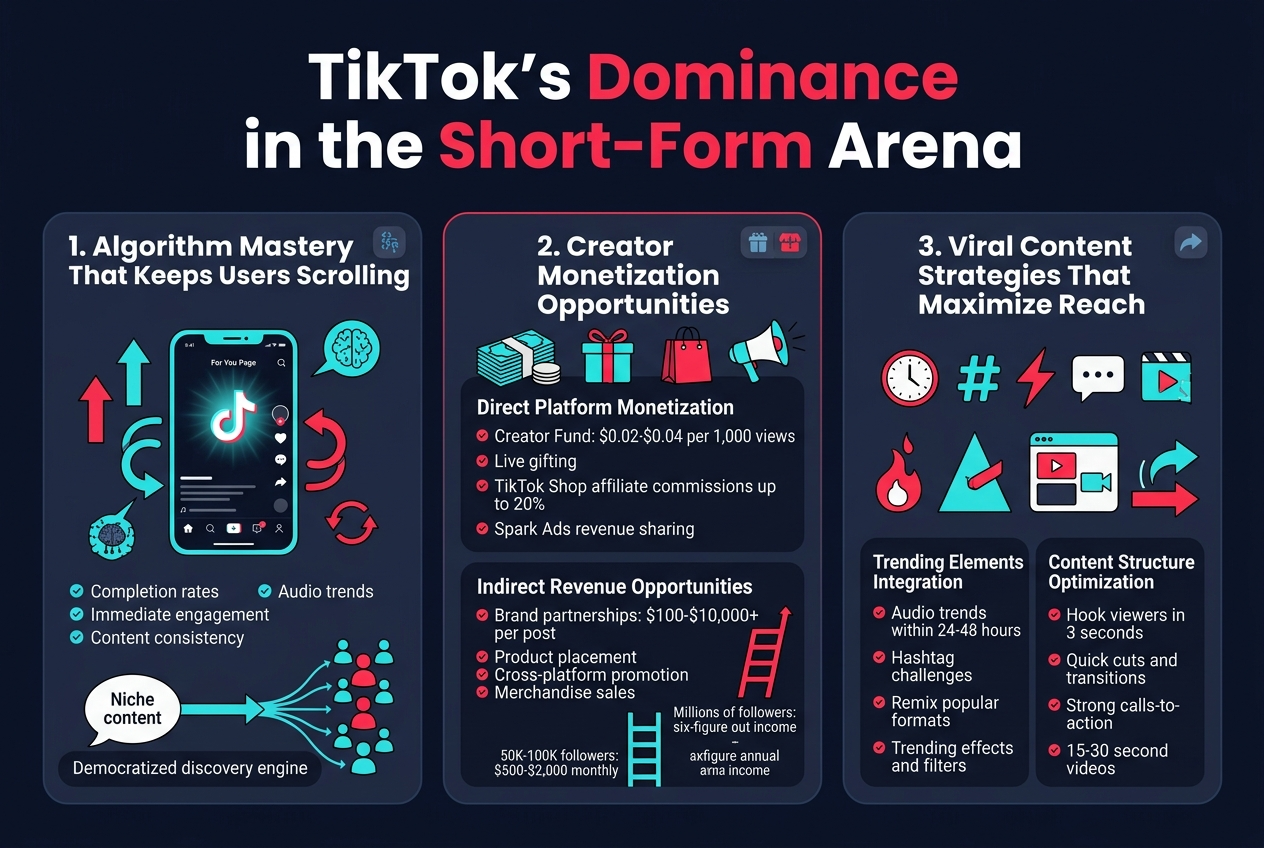
TikTok’s algorithm stands as the gold standard for content discovery, creating an addictive user experience that competitor platforms struggle to replicate. The platform’s sophisticated machine learning system analyzes countless data points in real-time, including watch time, engagement rates, shares, and even how quickly users scroll past content.
What makes TikTok’s algorithm particularly powerful is its ability to surface niche content to the right audience. Unlike traditional social media platforms that rely heavily on follower connections, TikTok’s For You Page operates as a democratized discovery engine where anyone can go viral regardless of their follower count.
The algorithm prioritizes several key factors:
- Completion rates: Videos watched from start to finish receive significant algorithmic boost
- Immediate engagement: Likes, comments, and shares within the first hour carry extra weight
- Content consistency: Regular posting at optimal times increases algorithmic favor
- Audio trends: Using trending sounds dramatically increases reach potential
TikTok’s recommendation system learns user preferences with remarkable speed, often understanding viewing habits within just a few interactions. This creates the infamous “TikTok rabbit hole” effect where users lose track of time scrolling through perfectly curated content.
Creator Monetization Opportunities and Earning Potential
TikTok has evolved from a entertainment platform into a legitimate income source for creators across various niches. The platform offers multiple revenue streams that cater to creators at different stages of their journey.
Direct Platform Monetization:
- Creator Fund payments ranging from $0.02-$0.04 per 1,000 views
- Live gifting where viewers send virtual gifts convertible to real money
- TikTok Shop affiliate commissions reaching up to 20% on product sales
- Spark Ads program allowing brands to promote creator content with revenue sharing
Indirect Revenue Opportunities:
- Brand partnership deals often paying $100-$10,000+ per sponsored post
- Product placement collaborations with emerging and established brands
- Cross-platform promotion driving traffic to YouTube, Instagram, or personal websites
- Merchandise sales leveraging TikTok’s built-in shopping features
The earning potential varies dramatically based on niche, engagement rates, and audience demographics. Micro-influencers with 50,000-100,000 followers can earn $500-$2,000 monthly through brand partnerships alone. Top-tier creators with millions of followers command six-figure annual incomes through diversified monetization strategies.
TikTok’s Creator Marketplace has streamlined brand-creator connections, making it easier for creators to secure paid partnerships. The platform’s analytics tools provide detailed audience insights, helping creators justify their rates to potential sponsors.
Viral Content Strategies That Maximize Reach
Creating viral content on TikTok requires understanding both algorithmic preferences and human psychology. Successful creators employ specific tactics that increase their chances of widespread distribution.
Trending Elements Integration:
- Jumping on audio trends within 24-48 hours of emergence
- Participating in hashtag challenges while adding unique personal twists
- Remixing popular content formats with original perspectives
- Using trending effects and filters strategically without oversaturating content
Content Structure Optimization:
- Hook viewers within the first 3 seconds using compelling visuals or statements
- Maintain high visual interest through quick cuts, transitions, and engaging backgrounds
- End with strong calls-to-action encouraging comments, follows, or shares
- Keep videos between 15-30 seconds for optimal completion rates
Community Engagement Tactics:
- Respond to comments with video replies to boost engagement metrics
- Create content addressing viewer questions and feedback
- Collaborate with other creators through duets and stitches
- Post consistently during peak audience activity hours
Psychological Triggers:
- Leverage FOMO (fear of missing out) through limited-time content
- Use curiosity gaps that make viewers watch until the end
- Create relatable content that resonates with specific demographics
- Incorporate humor, surprise, or emotional storytelling elements
Successful viral strategies often combine multiple trending elements while maintaining authentic creator voice. The key lies in balancing algorithm optimization with genuine audience value, creating content that people genuinely want to share rather than purely chasing metrics.
YouTube Shorts’ Strategic Response and Growth
Leveraging Existing Creator Ecosystems for Rapid Adoption
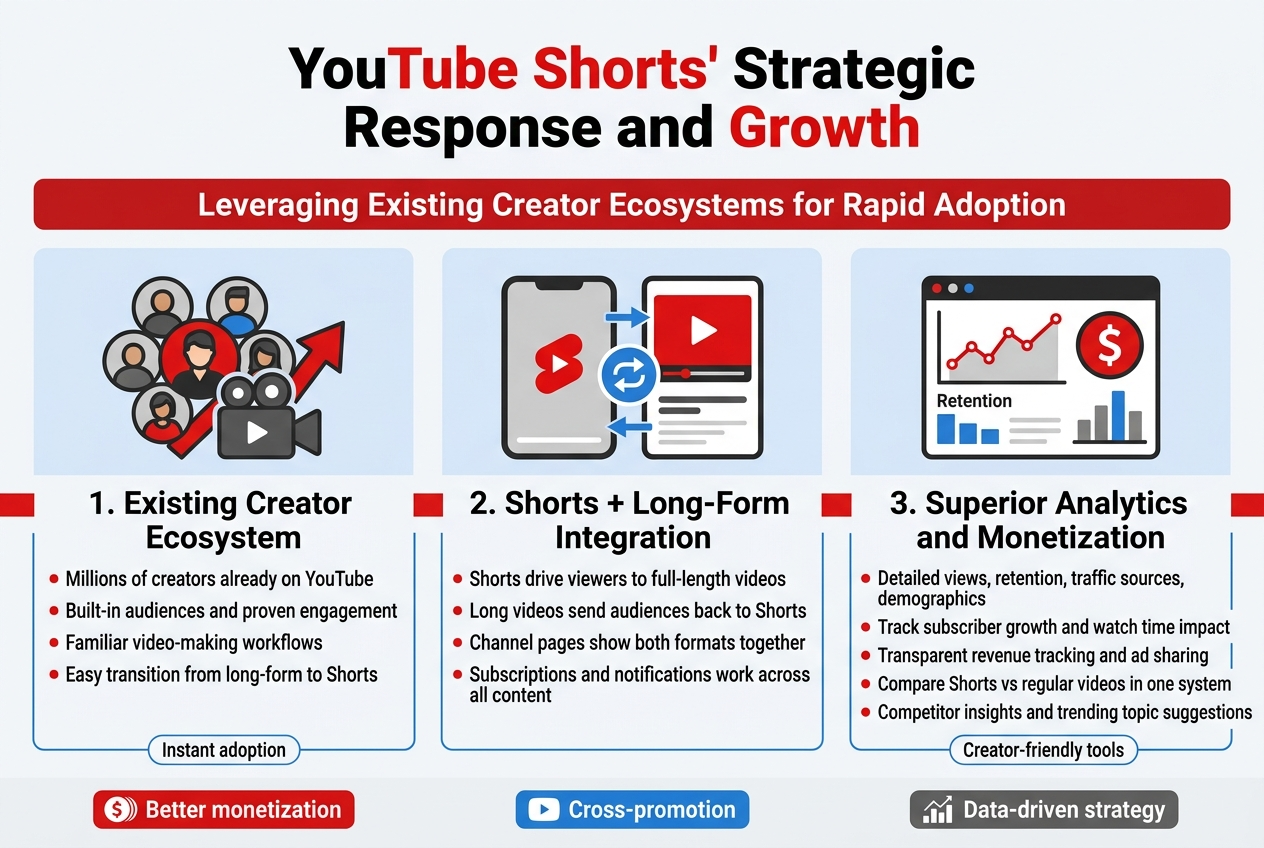
YouTube’s approach to launching Shorts was nothing short of brilliant – they already had millions of creators on their platform who were eager for new ways to grow their audiences. Instead of starting from scratch like other platforms, YouTube tapped into their existing community of content creators who had established relationships, proven engagement, and deep understanding of video content creation.
The platform rolled out Shorts to creators who already knew how to make compelling videos, just in longer formats. These creators brought their existing audiences with them, creating an instant user base that TikTok had spent years building. Many YouTubers were already experimenting with shorter clips as teasers for their main content, so the transition felt natural rather than forced.
YouTube also implemented creator-friendly policies from day one, offering better monetization opportunities compared to TikTok’s initially limited revenue streams. This attracted established influencers who were looking for platforms that could actually pay their bills. The Creator Fund and ad revenue sharing made Shorts immediately attractive to professional content creators.
The platform’s creator tools were familiar too. Creators didn’t need to learn entirely new interfaces or workflows – they could use the same YouTube Studio they’d been working with for years, just with additional short-form features.
Integration Advantages with Long-Form Content Channels
The seamless integration between Shorts and regular YouTube videos creates unique advantages that TikTok simply can’t match. Creators can use Shorts as powerful promotional tools for their main content, creating teaser clips, highlights, or behind-the-scenes moments that drive viewers to their longer videos.
This cross-pollination works both ways. Viewers discovering creators through Shorts often explore their full-length content, while existing subscribers get additional touchpoints with their favorite creators through short-form content. The algorithm recognizes these connections, creating a reinforcing cycle that benefits both content types.
Channel pages display Shorts alongside regular videos, giving creators a comprehensive content hub rather than forcing them to maintain separate presences on different platforms. This unified approach means creators can tell more complete stories – using Shorts for quick updates and longer videos for deep dives.
The subscription model carries over perfectly. When someone subscribes to a channel through a Short, they automatically get notifications for all that creator’s content. This creates stronger creator-audience relationships compared to platforms where discovery and following are separate experiences.
Superior Analytics and Performance Tracking Tools
YouTube’s analytics infrastructure, built over nearly two decades, gives Shorts creators incredibly detailed insights that dwarf what’s available on competing platforms. Creators can track not just views and engagement, but also audience retention graphs, traffic sources, and demographic breakdowns with precision that helps optimize content strategy.
The analytics show exactly how Shorts performance impacts overall channel growth, including subscriber conversions, watch time increases, and cross-content engagement. Creators can see which Shorts drive the most traffic to their long-form videos and adjust their strategy accordingly.
Revenue tracking is transparent and detailed. Creators know exactly how much they’re earning from Shorts views, ad impressions, and channel memberships gained through short-form content. This level of financial transparency helps creators make informed decisions about where to invest their time and energy.
The data integration means creators can compare Shorts performance against their regular videos using the same metrics and timeframes. They can identify trends, seasonal patterns, and audience preferences across their entire content library rather than treating short-form as a completely separate venture.
Performance insights include competitor analysis tools and trending topic suggestions based on a creator’s niche, helping them stay ahead of content trends while maintaining their unique voice and style.
Platform Performance Metrics That Matter
User Engagement Rates and Watch Time Comparisons
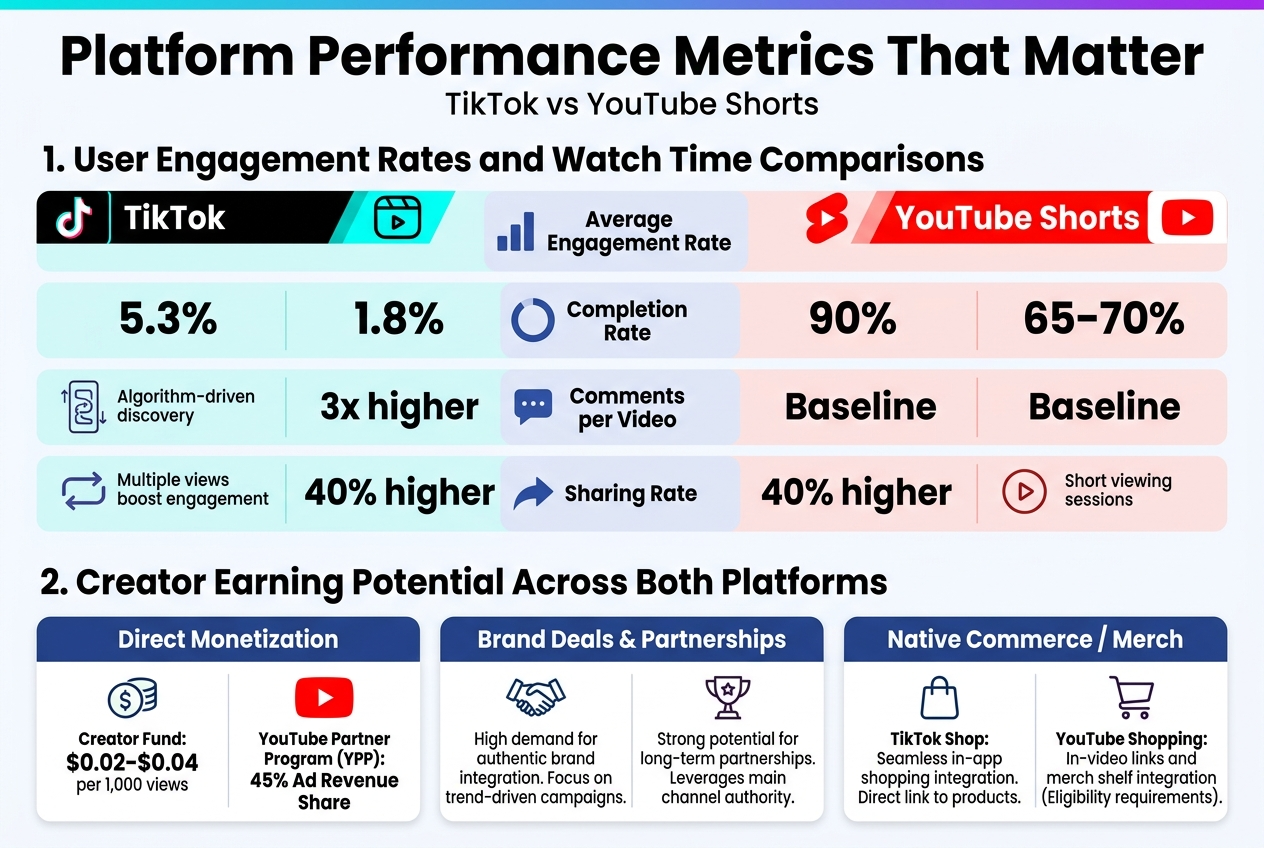
TikTok consistently outperforms YouTube Shorts when it comes to raw engagement metrics. The platform boasts an average engagement rate of 5.3%, significantly higher than YouTube Shorts’ 1.8%. This difference stems from TikTok’s algorithm, which prioritizes content discovery and keeps users scrolling through an endless feed of personalized videos.
Watch time tells an interesting story. While TikTok videos average 15-60 seconds with completion rates around 90%, YouTube Shorts can extend up to 60 seconds but see completion rates drop to 65-70%. TikTok users tend to watch videos multiple times, boosting overall engagement, while YouTube Shorts viewers often move on after a single viewing.
Comments and shares paint a clear picture too. TikTok generates 3x more comments per video compared to YouTube Shorts, and sharing rates are 40% higher. The platform’s culture encourages interaction through duets, stitches, and trending challenges, creating a more participatory environment.
| Metric | TikTok | YouTube Shorts |
|---|---|---|
| Average Engagement Rate | 5.3% | 1.8% |
| Completion Rate | 90% | 65-70% |
| Comments per Video | 3x higher | Baseline |
| Sharing Rate | 40% higher | Baseline |
Creator Earning Potential Across Both Platforms
YouTube Shorts offers more diverse monetization options for creators. The YouTube Partner Program allows creators to earn through ad revenue sharing, with creators typically earning $0.01-$0.03 per 1,000 views. Channel memberships, Super Thanks, and merchandise integration provide additional income streams that TikTok currently lacks.
TikTok’s Creator Fund pays significantly less – roughly $0.02-$0.04 per 1,000 views – but the platform excels in driving external opportunities. Brand partnerships on TikTok command higher rates, with micro-influencers (10K-100K followers) earning $100-$500 per sponsored post compared to $50-$200 on YouTube Shorts.
Live streaming revenue differs substantially. YouTube’s Super Chat and channel memberships during live streams can generate hundreds of dollars per session for popular creators. TikTok’s virtual gifts system typically yields lower returns, though top creators can still earn significant amounts during live sessions.
The real game-changer lies in audience conversion. TikTok creators often leverage their viral content to drive followers to other platforms where monetization is more robust. Many successful creators use TikTok as a discovery engine, then funnel audiences to YouTube channels, Instagram, or personal websites where earning potential multiplies dramatically.
Brand deal frequency also varies. TikTok’s younger demographic and trend-driven culture make it attractive to lifestyle and consumer brands, leading to more frequent collaboration opportunities, even if individual payments might be lower than YouTube’s more established creator economy.
Content Strategy Optimization for Maximum Impact
Platform-Specific Content Creation Techniques
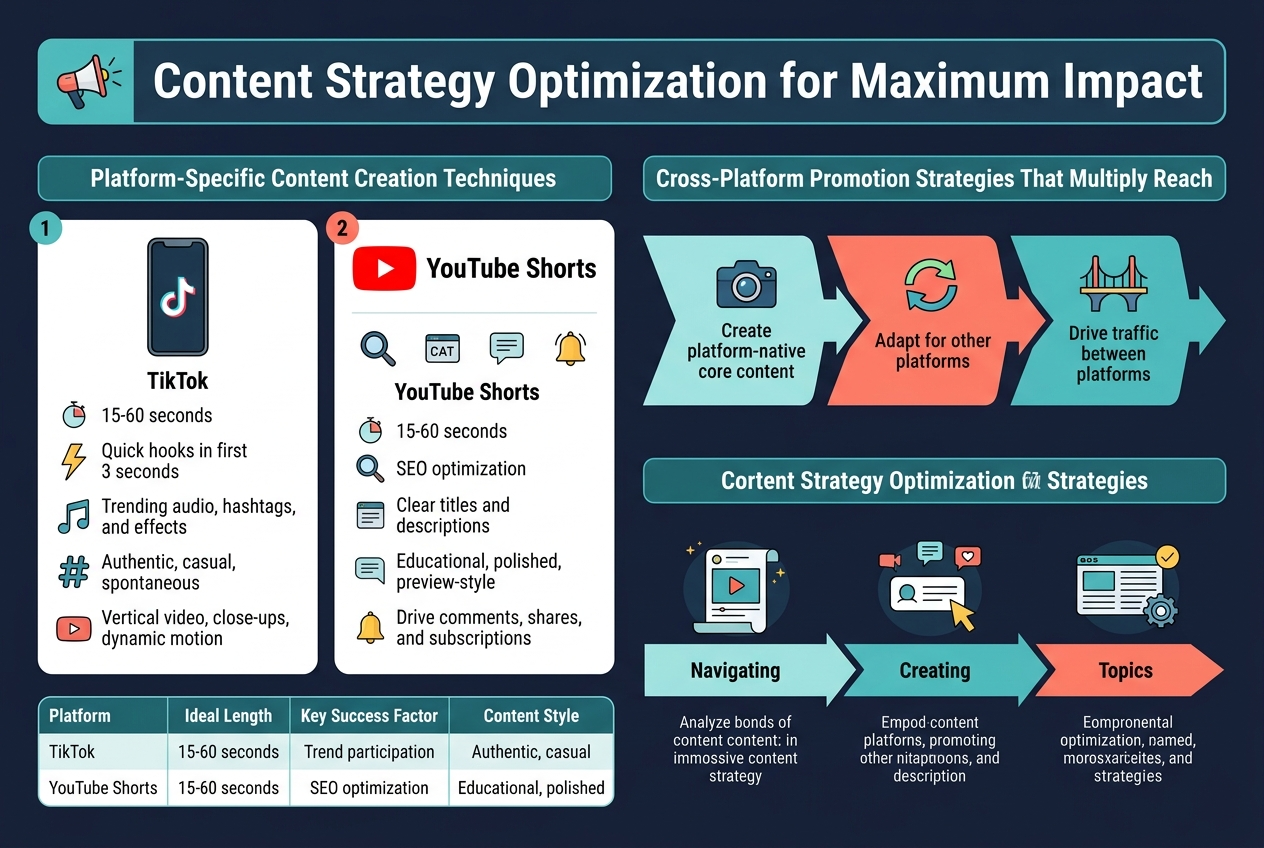
TikTok thrives on authentic, spontaneous content that feels native to the platform. The algorithm favors videos with quick hooks in the first 3 seconds, trending audio, and visual storytelling that keeps viewers engaged throughout the entire clip. Successful TikTok creators master the art of vertical video composition, using close-ups and dynamic camera movements that work well on mobile screens.
The platform rewards experimentation with trending hashtags, sounds, and effects. Content that participates in challenges or puts a unique spin on viral formats often performs exceptionally well. TikTok users expect content that feels personal and relatable, so polished, overly produced videos often underperform compared to those with a more casual, authentic vibe.
YouTube Shorts operates differently, benefiting from Google’s search capabilities and YouTube’s established creator ecosystem. Shorts perform best when they include clear, searchable titles and descriptions that help with discoverability beyond the Shorts shelf. The platform favors content that drives viewers to longer-form videos or encourages channel subscriptions.
YouTube Shorts creators should focus on educational content, tutorials condensed into bite-sized formats, and preview-style videos that tease longer content. The platform’s algorithm rewards watch time and engagement, so creating content that encourages comments and shares becomes crucial for growth.
| Platform | Ideal Length | Key Success Factor | Content Style |
|---|---|---|---|
| TikTok | 15-60 seconds | Trend participation | Authentic, casual |
| YouTube Shorts | 15-60 seconds | SEO optimization | Educational, polished |
Cross-Platform Promotion Strategies That Multiply Reach
Smart creators develop content ecosystems that work across multiple platforms while respecting each platform’s unique characteristics. The key lies in creating core content that can be adapted rather than simply reposted across channels.
Start with platform-native creation on your strongest channel, then adapt that content for other platforms. A successful TikTok video can become a YouTube Short with added captions and descriptions, while a YouTube Short can be reformatted for TikTok with trending audio overlays.
Cross-promotion works best when you create teaser content on one platform that drives traffic to fuller content on another. TikTok creators often post behind-the-scenes clips that direct viewers to complete videos on YouTube, while YouTube creators use Shorts to highlight the best moments from longer videos, encouraging viewers to watch the full content.
Building a content calendar that plans cross-platform releases maximizes your reach potential. Release your strongest content when your target audience is most active on each platform, and use analytics to identify which content types perform best where.
Consider creating platform-specific calls-to-action that feel natural. TikTok videos might end with “Part 2 on my YouTube,” while YouTube Shorts can include “Quick version on TikTok” in descriptions. This approach builds audience bridges between platforms without feeling forced or promotional.
The most successful creators maintain consistent branding elements across platforms while adapting their content style to match each platform’s culture and user expectations.
Future Trends Shaping Short-Form Content Success
Emerging Technologies That Will Transform Video Creation
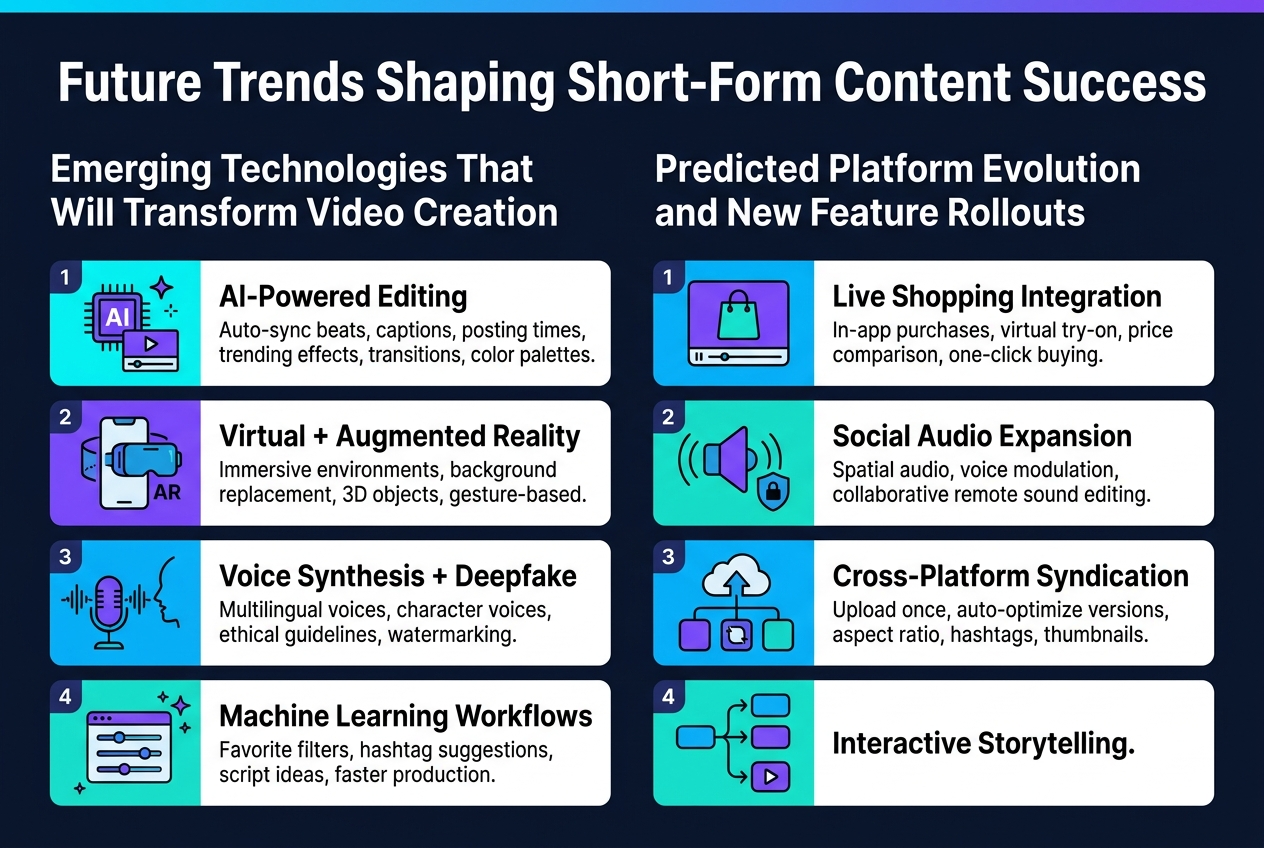
Artificial intelligence is revolutionizing how creators produce short-form content, making professional-quality videos accessible to everyone. AI-powered editing tools now automatically sync footage to beats, generate captions in multiple languages, and suggest optimal posting times based on audience behavior patterns. These smart systems analyze thousands of viral videos to recommend trending effects, transitions, and even color palettes that boost engagement rates.
Virtual and augmented reality features are becoming mainstream across platforms. Creators can now place viewers inside immersive environments without expensive equipment, using smartphone cameras and advanced algorithms. The technology allows for real-time background replacement, 3D object placement, and interactive elements that respond to viewer gestures.
Voice synthesis and deepfake technology, while controversial, are opening creative possibilities for content creators. These tools enable multilingual content creation, character voices, and even posthumous collaborations with deceased artists. Platforms are developing ethical guidelines and watermarking systems to maintain transparency.
Machine learning algorithms are personalizing content creation workflows. These systems learn individual creator preferences, automatically applying favorite filters, suggesting relevant hashtags, and even generating script ideas based on trending topics and past performance data. The technology reduces production time from hours to minutes while maintaining creative authenticity.
Predicted Platform Evolution and New Feature Rollouts
Live shopping integration is becoming the next major battleground between platforms. TikTok and YouTube Shorts are developing sophisticated e-commerce features that allow viewers to purchase products directly within videos without leaving the app. This includes virtual try-on capabilities, price comparison tools, and one-click purchasing systems that streamline the buyer journey.
Social audio features are expanding beyond simple background music. Platforms are testing spatial audio that creates immersive soundscapes, voice modulation tools that protect creator privacy, and collaborative audio editing that lets multiple creators contribute to soundtracks remotely. These features blur the lines between video content and podcast-style audio experiences.
Cross-platform content syndication will become seamless through API integrations. Creators will upload once and automatically distribute optimized versions across multiple platforms, with each version tailored to specific platform requirements and audience preferences. This includes automatic aspect ratio adjustments, platform-specific hashtag suggestions, and customized thumbnails.
Interactive storytelling features are evolving beyond simple polls and questions. Platforms are developing choose-your-own-adventure formats, mini-games embedded within videos, and collaborative storytelling where viewers contribute to narrative development. These features transform passive viewers into active participants, dramatically increasing engagement rates and watch times.
Advanced analytics dashboards will provide creators with predictive insights rather than just historical data. These tools will forecast optimal posting schedules, predict content performance before publication, and suggest collaboration opportunities with other creators based on audience overlap and engagement patterns.
The battle between TikTok and YouTube Shorts has reshaped how we consume and create content online. TikTok’s algorithm-driven discovery and authentic, unpolished content style set the standard for short-form engagement, while YouTube Shorts leveraged its massive creator ecosystem and monetization tools to quickly gain ground. Both platforms offer unique advantages – TikTok excels at viral discovery and cultural trends, while YouTube Shorts benefits from integrated long-form content strategies and established creator relationships.
Success on either platform comes down to understanding your audience and adapting your content strategy accordingly. Focus on creating engaging hooks in the first few seconds, experiment with trending audio and formats, and pay attention to platform-specific metrics like completion rates and shares. The short-form content landscape will continue evolving rapidly, so stay flexible and ready to pivot your approach. Choose the platform that aligns best with your content goals and audience, or better yet, develop a cross-platform strategy that takes advantage of both TikTok’s discovery power and YouTube’s comprehensive creator tools.