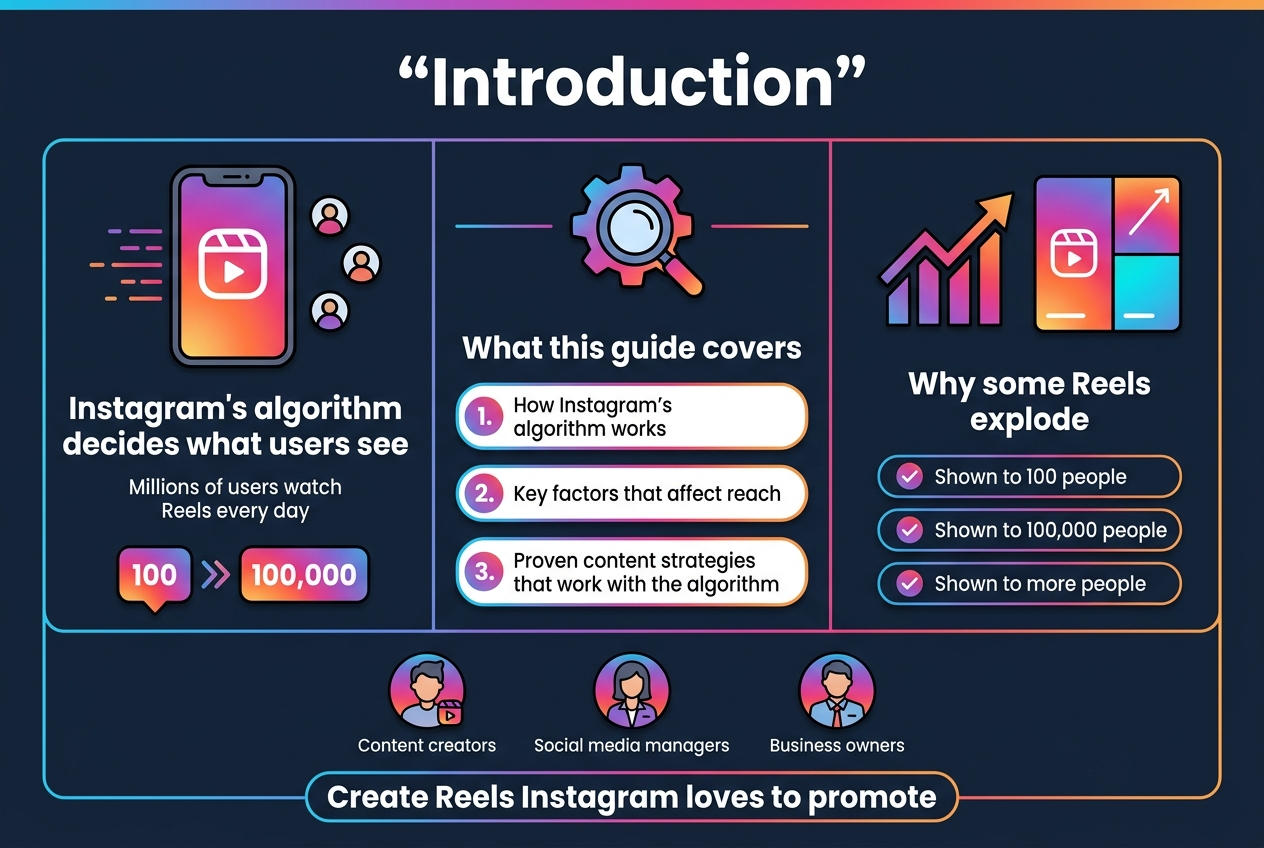
Instagram’s algorithm decides which Reels millions of users see every day, but most creators don’t understand how it actually works. This guide is for content creators, social media managers, and business owners who want to crack the code behind Instagram Reels and get their content in front of more people.
We’ll break down Instagram’s algorithm and reveal the key factors that determine whether your Reel gets shown to 100 people or 100,000. You’ll learn proven content creation strategies that work with the algorithm instead of against it, plus discover why some Reels explode while others barely get noticed. By the end, you’ll know exactly how to create Reels that Instagram loves to promote.
How Instagram’s Algorithm Actually Works
Machine Learning Foundation and Neural Networks
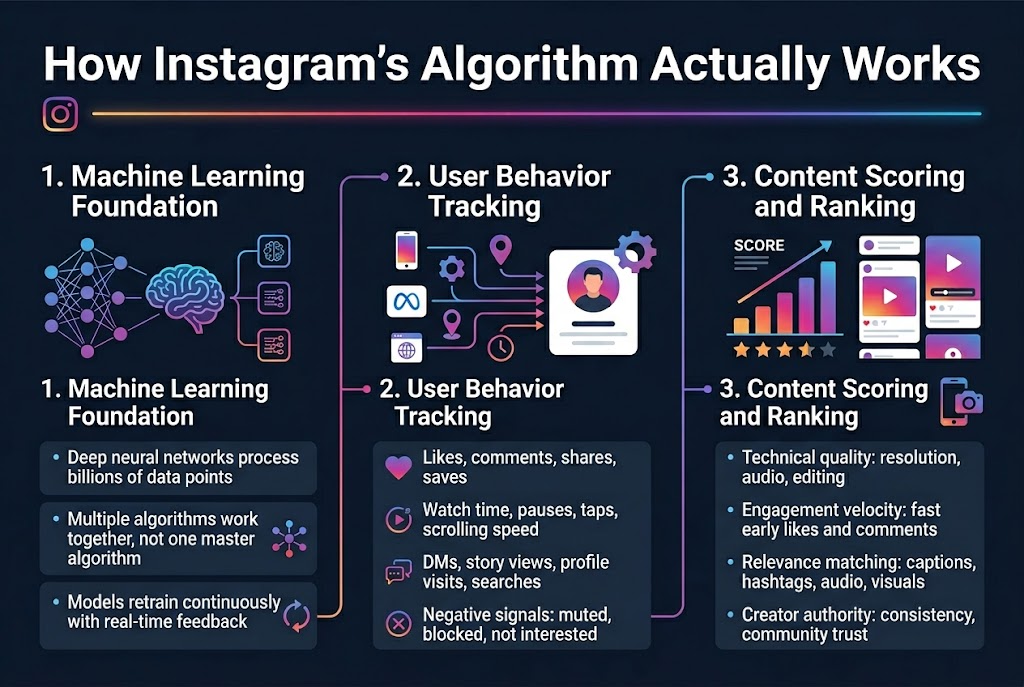
Instagram’s algorithm runs on sophisticated machine learning models that constantly evolve and adapt. The platform uses deep neural networks to process billions of data points every second, creating personalized content feeds for over 2 billion users. These neural networks work like digital brains, recognizing patterns in user behavior that would be impossible for humans to detect manually.
The core system relies on multiple interconnected algorithms rather than a single master algorithm. Each serves a specific purpose – one focuses on understanding what makes content engaging, another predicts which users are most likely to interact with specific posts, and yet another determines the optimal timing for content delivery. These algorithms communicate with each other, sharing insights to create a comprehensive understanding of user preferences.
Instagram’s machine learning models undergo continuous training using real-time data. Every like, comment, share, and even the time spent viewing content feeds back into the system, helping it refine its predictions. The platform employs reinforcement learning techniques, where the algorithm essentially learns from its successes and failures, becoming smarter with each interaction.
User Behavior Tracking and Data Collection
Instagram tracks an extensive range of user behaviors beyond simple likes and follows. The platform monitors how long you pause on specific content, whether you tap to see more information, if you visit a creator’s profile, and even subtle movements like scrolling speed. This granular tracking creates detailed user profiles that inform content recommendations.
The data collection extends to cross-platform behavior through Meta’s ecosystem. Your Facebook activity, WhatsApp usage patterns, and even third-party website visits (through Facebook Pixel) contribute to your Instagram content preferences. The algorithm also considers device information, location data, and usage patterns throughout different times of day.
Instagram analyzes relationship signals to understand your social connections. The platform tracks whose content you consistently engage with, who you direct message, whose stories you view completely, and even whose profiles you search for manually. These relationship indicators heavily influence which content appears in your feed and Reels tab.
The platform also monitors negative signals – content you quickly scroll past, accounts you’ve muted or blocked, and posts you’ve marked as “not interested.” This negative feedback is just as valuable as positive interactions for training the algorithm to avoid showing you similar content in the future.
Content Scoring and Ranking Systems
Every piece of content on Instagram receives multiple scores based on different factors. The algorithm evaluates content quality through technical metrics like video resolution, audio clarity, and editing sophistication. Posts that meet higher technical standards typically receive better initial distribution to test audience response.
Engagement velocity plays a crucial role in content scoring. The algorithm measures how quickly content receives interactions after posting – rapid engagement within the first few minutes signals high-quality content that deserves wider distribution. The system also weighs different types of engagement differently: comments and saves typically carry more weight than simple likes.
Instagram’s ranking system considers relevance matching between content and users. The algorithm analyzes content elements like captions, hashtags, audio tracks, and visual components to determine which users would find the content most relevant. This matching process happens in milliseconds for every piece of content shown to every user.
The scoring system also evaluates creator authority and consistency. Accounts with established engagement patterns, regular posting schedules, and positive community interactions receive algorithmic advantages. However, the system still provides opportunities for newer creators through discovery features and hashtag-based distribution, ensuring fresh content continues to surface across the platform.
Key Factors That Determine Reel Visibility
Engagement Metrics and Their Weight in Rankings
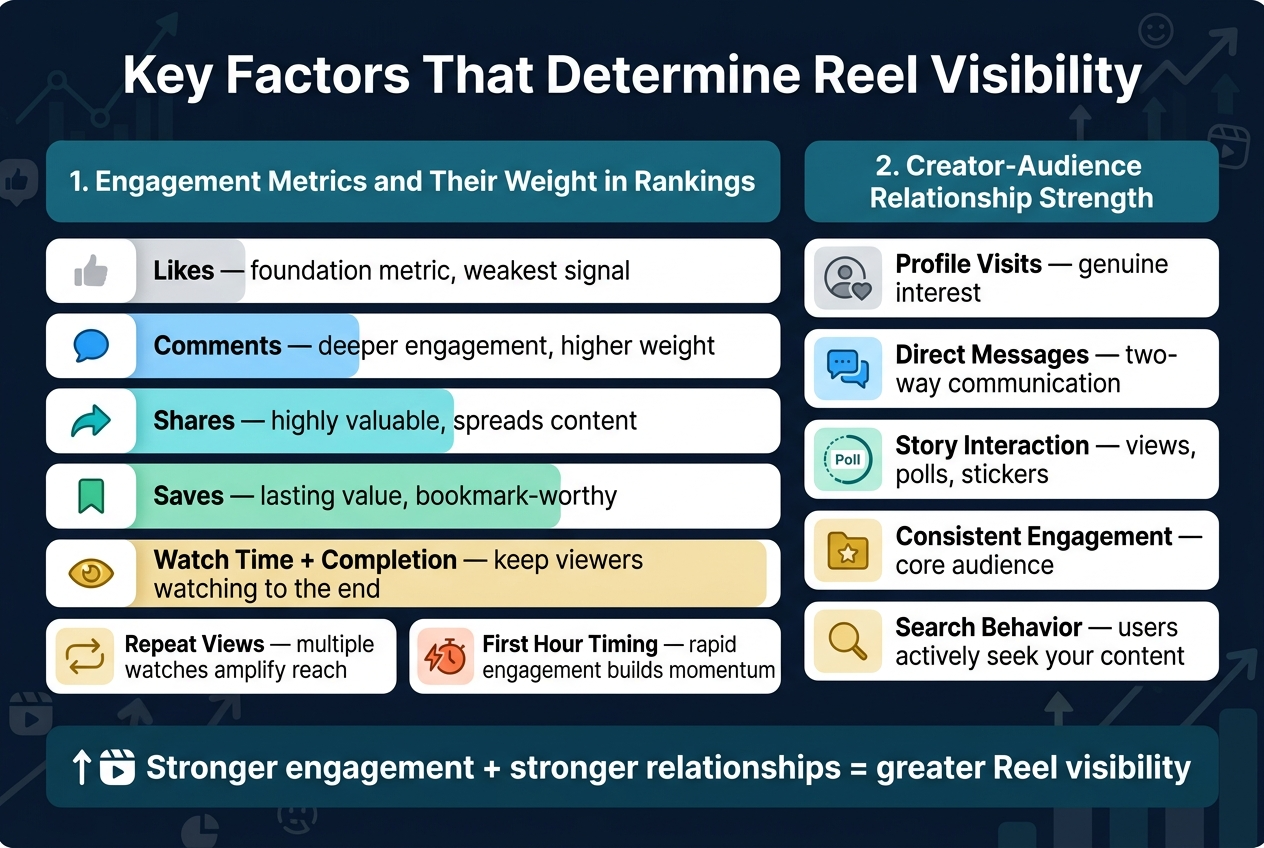
Instagram’s algorithm treats different engagement signals like pieces of a puzzle, with each metric carrying varying degrees of importance. Likes serve as the foundation metric, but they’re actually the weakest signal in the algorithm’s decision-making process. Comments carry significantly more weight because they represent deeper engagement – someone took time to form thoughts and share them.
Shares and saves pack the biggest punch. When someone shares your Reel, Instagram interprets this as highly valuable content worth spreading to others. Saves signal that your content provides lasting value, prompting the algorithm to show it to similar users who might also find it bookmark-worthy.
Watch time and completion rates create another crucial layer. The algorithm closely monitors how long people watch your Reel and whether they watch it to the end. A 15-second Reel with 90% completion rate will typically outperform a 30-second Reel with 40% completion. The sweet spot lies in creating content that maintains viewer attention throughout its entire duration.
Repeat views amplify your reach exponentially. When someone watches your Reel multiple times, Instagram considers this premium engagement. Users who loop your content multiple times signal to the algorithm that your Reel deserves broader distribution.
The timing of engagement matters too. Rapid engagement within the first hour after posting gives your Reel momentum that can carry it through Instagram’s various recommendation feeds.
Creator-Audience Relationship Strength
Instagram prioritizes content from creators who maintain strong relationships with their followers. The algorithm evaluates relationship strength through several behavioral patterns that go beyond simple follower counts.
Profile visits from your followers indicate genuine interest in your content. When someone regularly checks your profile or story highlights, Instagram recognizes this as a strong connection signal. These engaged followers are more likely to see your new Reels in their feeds.
Direct message interactions create powerful relationship indicators. Followers who regularly respond to your stories with DMs or start conversations about your content signal to Instagram that they value your relationship. This two-way communication strengthens your algorithmic standing.
Story interaction patterns reveal relationship depth. Users who consistently view your stories, respond to polls, or engage with stickers demonstrate ongoing interest. Instagram tracks these micro-interactions and uses them to determine who should see your Reels first.
Consistent engagement history plays a major role. If someone regularly likes, comments, or shares your content over time, Instagram identifies them as a core audience member. These loyal followers receive priority placement for your new content.
Search behavior also influences relationship strength. When followers search for your username or actively seek out your content, Instagram interprets this as high relationship value. Users who manually search for creators typically see their content more frequently in feeds and explore pages.
Content Creation Strategies That Beat the Algorithm
Optimal Posting Times for Maximum Reach
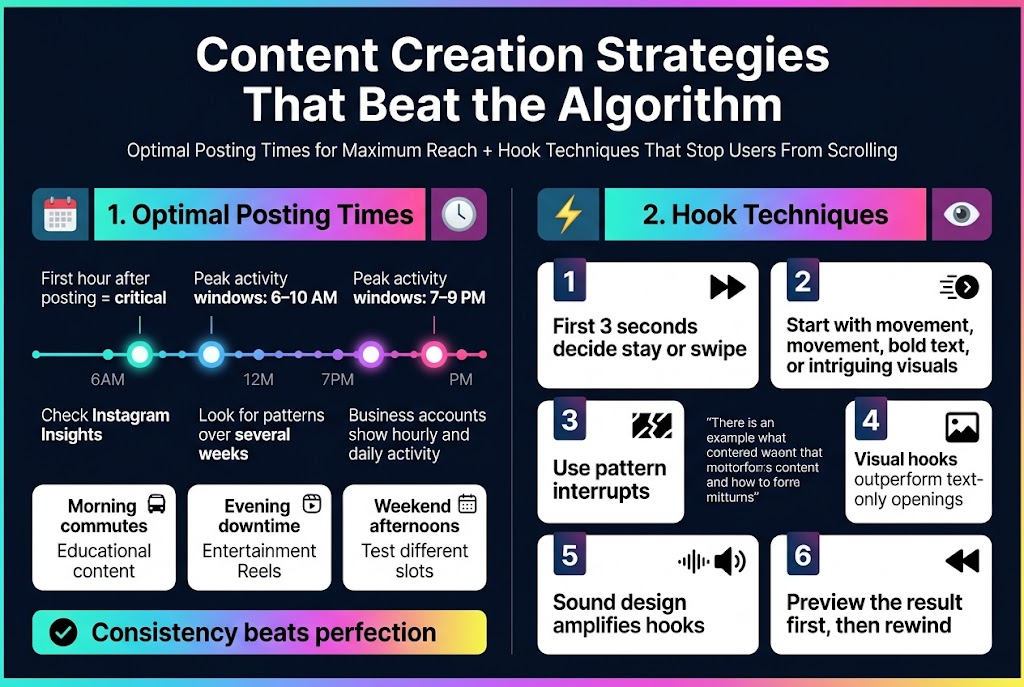
Timing can make or break your Reel’s performance. Instagram’s algorithm prioritizes fresh content, meaning the first hour after posting is critical for gaining momentum. Peak activity windows typically fall between 6-10 AM and 7-9 PM in your target audience’s timezone, when users scroll through their feeds during commutes and evening downtime.
However, generic “best times” often mislead creators. Your audience’s specific habits matter more than universal recommendations. Check your Instagram Insights to identify when your followers are most active. Look for patterns over several weeks rather than single-day spikes. Business accounts show detailed audience activity breakdowns by hour and day.
Consider your content’s nature when scheduling. Educational content performs well during morning commutes when people consume informative material. Entertainment-focused Reels thrive during evening hours when users seek relaxation. Weekend posting patterns differ significantly from weekdays, with afternoon slots often outperforming traditional peak times.
Test different posting windows systematically. Post similar content types at various times and track engagement rates, reach, and completion percentages. What works for fitness influencers won’t necessarily work for food bloggers or business coaches.
Remember that consistency beats perfection. Regular posting schedules train both the algorithm and your audience to expect content. If you can’t post during optimal windows, maintaining frequency matters more than hitting perfect timing.
Hook Techniques That Stop Users From Scrolling
The first three seconds determine whether viewers stay or swipe away. Instagram’s algorithm heavily weights early engagement signals, making strong hooks essential for broader distribution. Start with movement, bold text overlays, or intriguing visuals that immediately grab attention.
Pattern interrupts work exceptionally well on social media. Begin with unexpected statements, contrarian viewpoints, or surprising statistics. Instead of “Here’s how to make pancakes,” try “This pancake mistake ruins breakfast for 90% of people.” The controversy or curiosity gap compels viewers to continue watching.
Visual hooks outperform text-only openings. Quick cuts, bright colors, or dramatic before-and-after shots create instant visual interest. Face-to-camera content with genuine expressions builds connection faster than polished, distant shots. Close-ups of hands working, products being used, or transformation moments capture attention effectively.
Sound design amplifies hook effectiveness. Trending audio, sudden sound effects, or music that perfectly matches visual cues can stop scrollers in their tracks. Popular songs with recognizable beats or viral sound bites piggyback on existing audience familiarity.
Question-based hooks activate viewer psychology. “Can you guess what happens next?” or “Which option would you choose?” create mental investment. Users feel compelled to watch for answers, boosting completion rates that signal quality content to the algorithm.
Preview techniques build anticipation. Show the end result first, then rewind to explain the process. “This took me 30 seconds to fix” followed by the solution creates immediate value demonstration and encourages full viewing.
Understanding Instagram’s Content Distribution System
Explore Page Algorithm and Discovery Mechanisms
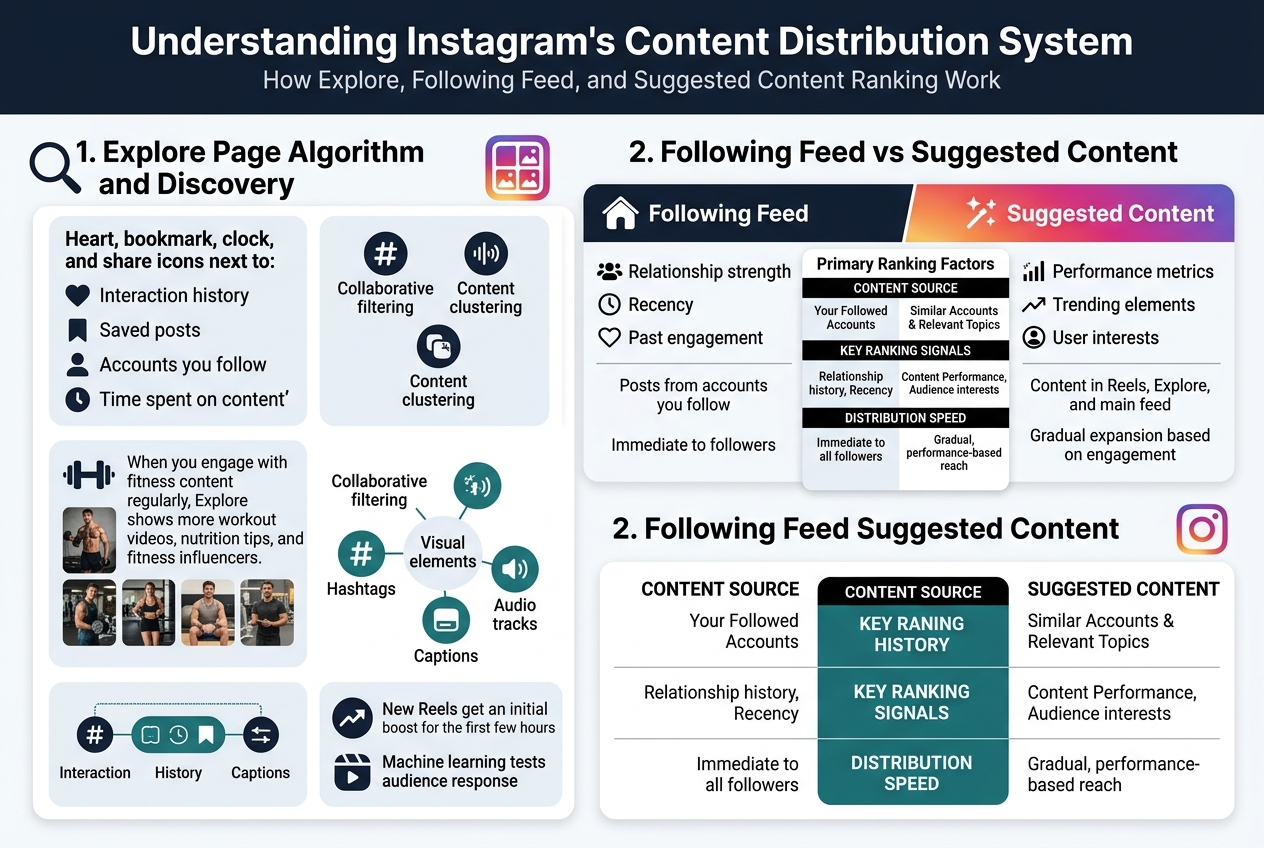
Instagram’s Explore page operates as a sophisticated content discovery engine that analyzes user behavior patterns to serve personalized recommendations. The algorithm evaluates multiple data points including your interaction history, saved posts, accounts you follow, and time spent viewing specific content types.
When you engage with fitness content regularly, the Explore page will gradually shift to showcase more workout videos, nutrition tips, and fitness influencers. The system tracks not just likes and comments, but also completion rates for Reels, screenshot activity, and shares to Stories.
The discovery mechanism works through collaborative filtering, meaning Instagram identifies users with similar interests and suggests content they’ve enjoyed. If someone with your viewing patterns consistently engages with a particular creator, that content becomes more likely to appear in your Explore feed.
Instagram also employs content clustering, grouping similar posts together based on visual elements, hashtags, audio tracks, and captions. Machine learning models continuously analyze these clusters to predict which content will resonate with different user segments.
The platform prioritizes fresh content while balancing it with proven performers. New Reels get an initial boost for the first few hours, allowing the algorithm to gauge audience response before deciding on broader distribution.
Following Feed vs Suggested Content Prioritization
Instagram operates two distinct content streams with different ranking priorities. Your Following feed primarily shows content from accounts you’ve chosen to follow, while suggested content appears throughout various platform sections including Reels, Explore, and even within your main feed.
The Following feed algorithm prioritizes recency and relationship strength. Posts from accounts you frequently interact with receive higher placement, while content from accounts you rarely engage with may appear lower or get filtered out entirely. Instagram measures relationship strength through direct messages, profile visits, Story views, and consistent engagement patterns.
Suggested content follows a different playbook focused on engagement potential and content performance. The algorithm identifies trending audio, hashtags, and content formats, then tests them with users who have shown interest in similar material. This creates opportunities for unknown creators to reach massive audiences if their content resonates.
| Content Type | Primary Ranking Factors | Distribution Speed |
|---|---|---|
| Following Feed | Relationship strength, recency, past engagement | Immediate to followers |
| Suggested Content | Performance metrics, trending elements, user interests | Gradual expansion based on engagement |
The platform allocates roughly 70% of feed real estate to following-based content and 30% to suggestions, though this ratio shifts based on individual user behavior. Users who frequently discover new accounts through suggestions see higher percentages of recommended content, while those who stick to their established network see more from accounts they follow.
Instagram’s algorithm also considers content saturation. If you’ve already seen several Reels from fitness creators today, the system might introduce variety by showing cooking videos or travel content to maintain engagement and prevent content fatigue.
Why Some Reels Go Viral While Others Don’t
Timing and Trend Alignment Strategies
The difference between a viral Reel and one that gets lost in the void often comes down to timing. Instagram’s algorithm heavily favors content that taps into current trends while they’re still gaining momentum, not after they’ve peaked.
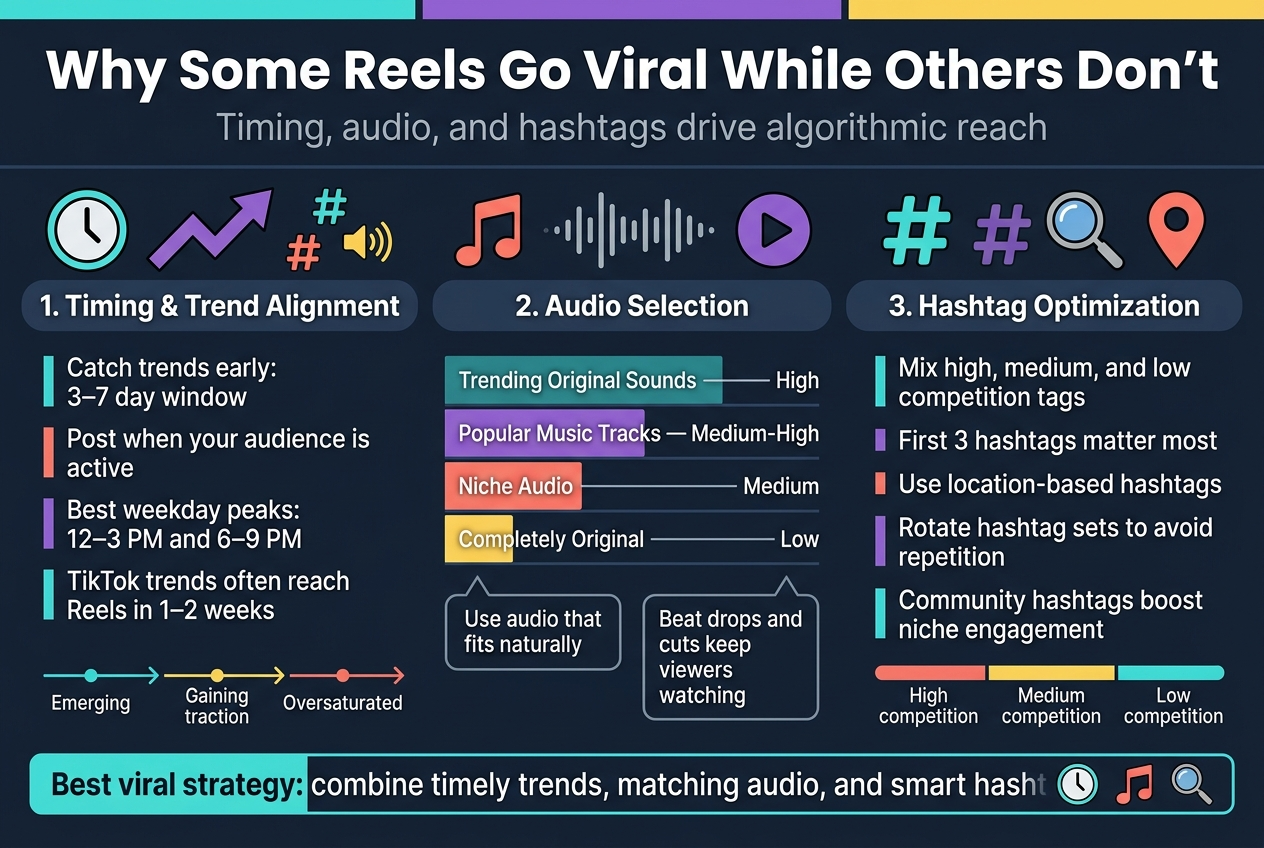
Smart creators monitor trending hashtags, sounds, and topics across multiple platforms to identify emerging patterns. The sweet spot hits when a trend has enough traction to be discoverable but hasn’t saturated the platform yet. This window typically lasts 3-7 days for most trends.
Posting timing matters just as much as trend timing. Your audience’s activity patterns directly impact initial engagement rates, which Instagram uses to determine broader distribution. Peak engagement windows vary by audience demographics, but generally fall between 6-9 PM and 12-3 PM on weekdays.
Cross-platform trend analysis gives creators a competitive edge. TikTok trends often migrate to Instagram Reels within 1-2 weeks, providing savvy creators with advance notice. Similarly, emerging pop culture moments, news events, or seasonal topics can be leveraged before they become oversaturated.
The algorithm also rewards creators who consistently participate in trends while maintaining their unique voice. Rather than copying trending content exactly, successful creators add their personal spin or niche-specific angle to make the trend relevant to their specific audience.
Audio Selection and Music Trend Leveraging
Audio selection can make or break a Reel’s viral potential. Instagram’s algorithm prioritizes content using trending audio tracks, giving these Reels significantly higher reach compared to original or outdated sounds.
The platform’s audio discovery system tracks engagement patterns across millions of posts. When a sound starts gaining rapid traction through saves, shares, and completion rates, the algorithm begins pushing it to broader audiences. Creators who jump on these audio trends early often see dramatic reach increases.
| Audio Type | Viral Potential | Best Use Case |
|---|---|---|
| Trending Original Sounds | High | Comedy, tutorials, personal stories |
| Popular Music Tracks | Medium-High | Lifestyle, fashion, dance |
| Niche Audio | Medium | Specialized content, educational |
| Completely Original | Low | Established creators only |
The key lies in matching audio to content naturally. Forced audio combinations feel inauthentic and typically underperform. The most successful viral Reels use trending audio that enhances their message rather than competing with it.
Audio timing within the Reel also impacts performance. The algorithm analyzes when viewers drop off, and audio that maintains engagement throughout the entire video length receives algorithmic boosts. Quick audio cuts, beat drops, or dialogue changes that coincide with visual transitions keep viewers watching longer.
Creators should regularly check Instagram’s audio library and TikTok’s trending sounds to stay ahead of audio trends. The most effective strategy involves building a content calendar around upcoming audio trends while keeping backup concepts ready for unexpected viral sounds.
Hashtag Optimization for Algorithmic Boost
Hashtag strategy has evolved far beyond simply adding #viral or #trending to every post. Instagram’s algorithm now analyzes hashtag relevance, competition levels, and user intent to determine content distribution.
The most effective approach combines high-competition hashtags with medium and low-competition alternatives. High-competition tags like #reels or #viral provide broad exposure but face intense competition. Medium-competition hashtags (10K-100K posts) offer better chances of reaching the “top posts” section, while low-competition tags (under 10K posts) help target specific niches.
Strategic hashtag placement also impacts algorithm performance. The first three hashtags carry more weight in Instagram’s categorization system, so leading with your most relevant tags improves content classification accuracy.
Hashtag research tools and competitor analysis reveal which tags drive engagement within specific niches. Successful creators regularly audit their hashtag performance, removing underperforming tags and testing new combinations.
Location-based hashtags often get overlooked but can provide significant algorithmic advantages. Local hashtags face less competition and help content appear in location-based searches, potentially exposing Reels to entirely new audiences.
The algorithm also rewards hashtag diversity over repetitive use. Rotating hashtag sets and avoiding exact duplicates across recent posts prevents the algorithm from categorizing accounts as spam or low-effort content creators.
Community hashtags related to specific interests, challenges, or movements often outperform generic tags because they target highly engaged user groups actively searching for related content.
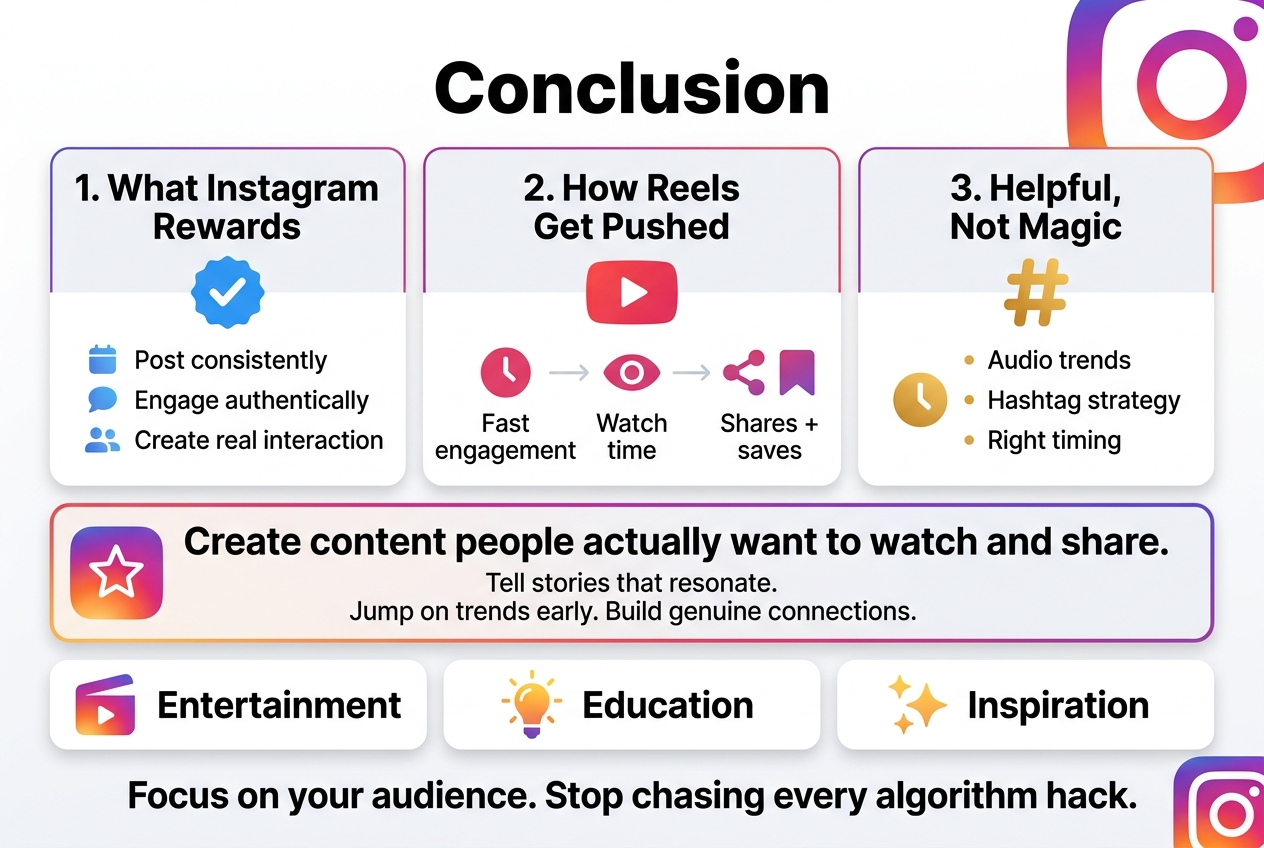
Instagram’s algorithm isn’t some mysterious black box – it’s a system you can understand and work with. The platform rewards creators who post consistently, engage authentically with their audience, and create content that sparks genuine interaction. Your Reels get pushed based on how quickly people engage, how long they watch, and whether they share or save your content. Audio trends, hashtag strategy, and posting at the right times all play important roles, but they’re not magic bullets.
The real secret to beating the algorithm comes down to creating content that people actually want to watch and share. Focus on telling stories that resonate, jumping on trends early, and building genuine connections with your followers. Stop chasing every algorithm hack you see online and start paying attention to what your specific audience responds to. When you create Reels that provide real value – whether that’s entertainment, education, or inspiration – the algorithm will naturally start working in your favor.