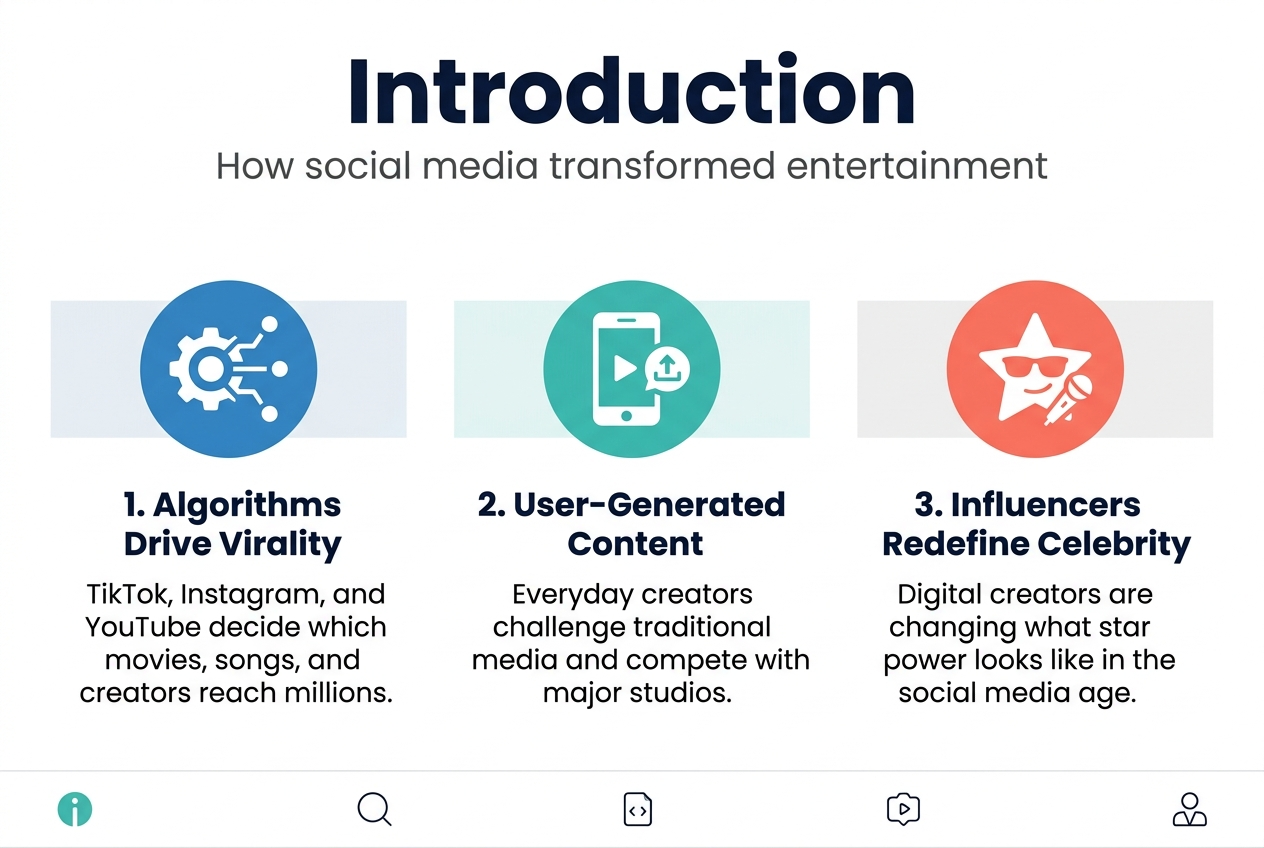
Social media has completely transformed how we discover, consume, and participate in entertainment. Platforms like TikTok, Instagram, and YouTube now dictate which movies go viral, which songs top the charts, and which creators become household names overnight.
This shift affects entertainment industry professionals, content creators, marketers, and anyone curious about how digital platforms are reshaping popular culture. Traditional gatekeepers no longer control what becomes the next big hit—algorithms and audiences do.
We’ll explore how platform algorithms now drive what content reaches millions of viewers and determines viral success. You’ll also discover how user-generated content is challenging traditional media production, giving everyday creators the power to compete with major studios. Finally, we’ll examine how influencers are redefining celebrity culture and changing what it means to have star power in the digital age.
Platform Algorithms Drive Content Discovery and Virality
Real-time trending mechanisms boost overnight sensations
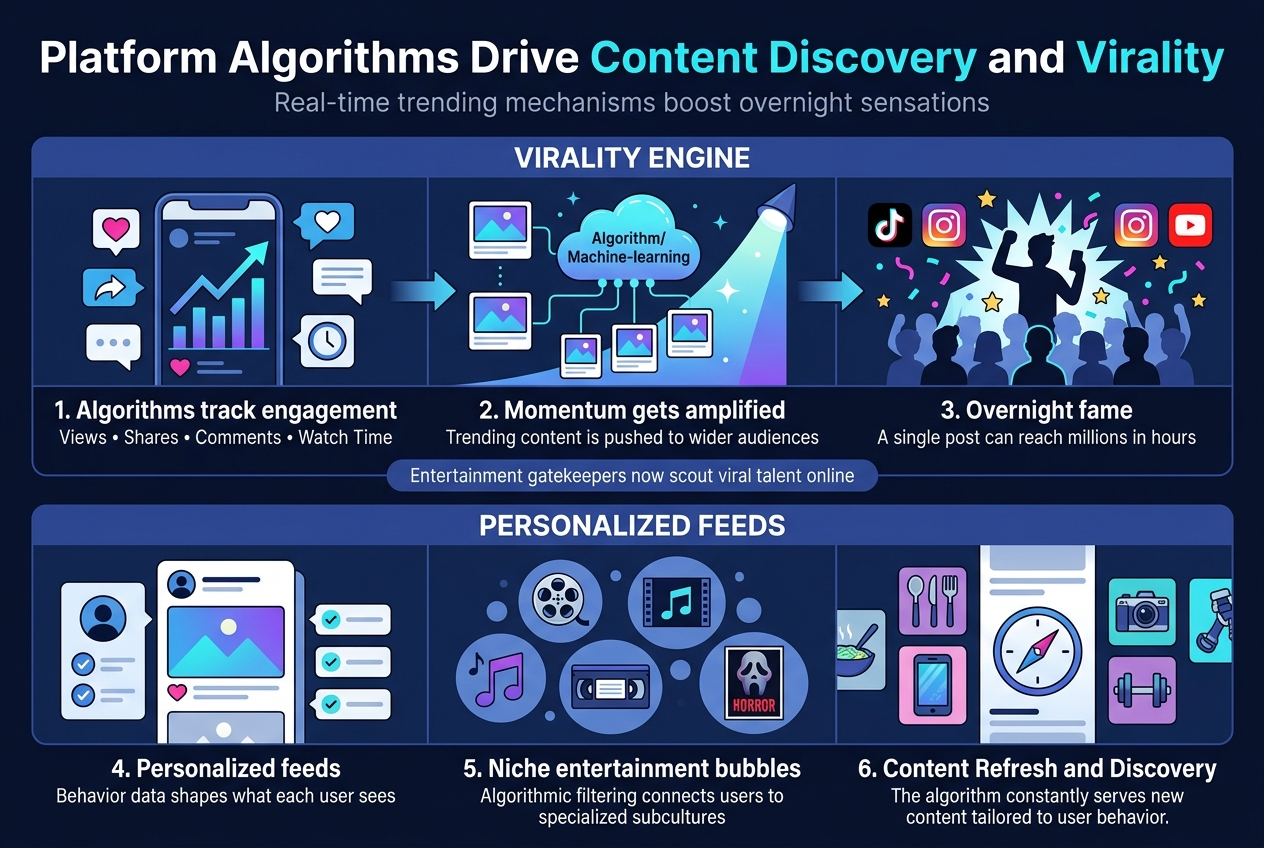
Social media algorithms have transformed how content spreads across the digital landscape, creating a new breed of viral phenomena that can catapult unknown creators to stardom within hours. These sophisticated systems continuously scan for engagement patterns, monitoring metrics like views, shares, comments, and watch time to identify content with viral potential.
When a video or post begins gaining momentum, algorithms amplify its reach by pushing it to broader audiences across platforms like TikTok, Instagram, and YouTube. The speed of this process has shortened the path to fame dramatically – where traditional media once required years of gradual exposure, creators now find themselves with millions of followers after a single piece of content catches fire.
The mechanisms behind this phenomenon involve complex machine learning models that predict user preferences and optimize for engagement. Platforms prioritize content that keeps users scrolling, commenting, and sharing, creating a feedback loop that rewards creators who understand these invisible rules. Dance trends, comedy sketches, and musical performances can explode into cultural moments that influence mainstream entertainment within days.
This shift has disrupted traditional gatekeeping structures in the entertainment industry. Record labels, talent agents, and production companies now scout social media platforms for emerging talent, recognizing that viral success often translates to commercial viability. Artists who might never have been discovered through conventional channels now have direct access to massive audiences.
Personalized feeds create niche entertainment bubbles
Algorithm-driven personalization has fundamentally altered how audiences consume entertainment, creating highly customized content ecosystems that cater to individual preferences and interests. These systems analyze user behavior patterns, from viewing history to interaction patterns, to curate feeds that maximize engagement and time spent on platforms.
The result is the formation of distinct entertainment niches that might never have found their audience in traditional broadcast media. Micro-communities form around specific interests – from vintage horror movie restoration to obscure musical genres – allowing creators to build dedicated followings for highly specialized content.
This personalization creates both opportunities and challenges for content creators. While niche audiences can now connect more easily with relevant content, breaking out of algorithmic bubbles becomes increasingly difficult. Creators often find themselves trapped within their established audience segments, struggling to expand their reach beyond the algorithm’s predetermined boundaries.
The entertainment landscape now resembles a collection of interconnected but distinct ecosystems rather than a single shared cultural space. Users consuming vastly different content types may exist on the same platform while having completely different entertainment experiences. This fragmentation has profound implications for how cultural trends develop and spread, as viral moments may remain confined to specific demographic or interest-based bubbles rather than achieving universal recognition.
User-Generated Content Reshapes Traditional Media Production
Amateur creators compete directly with major studios
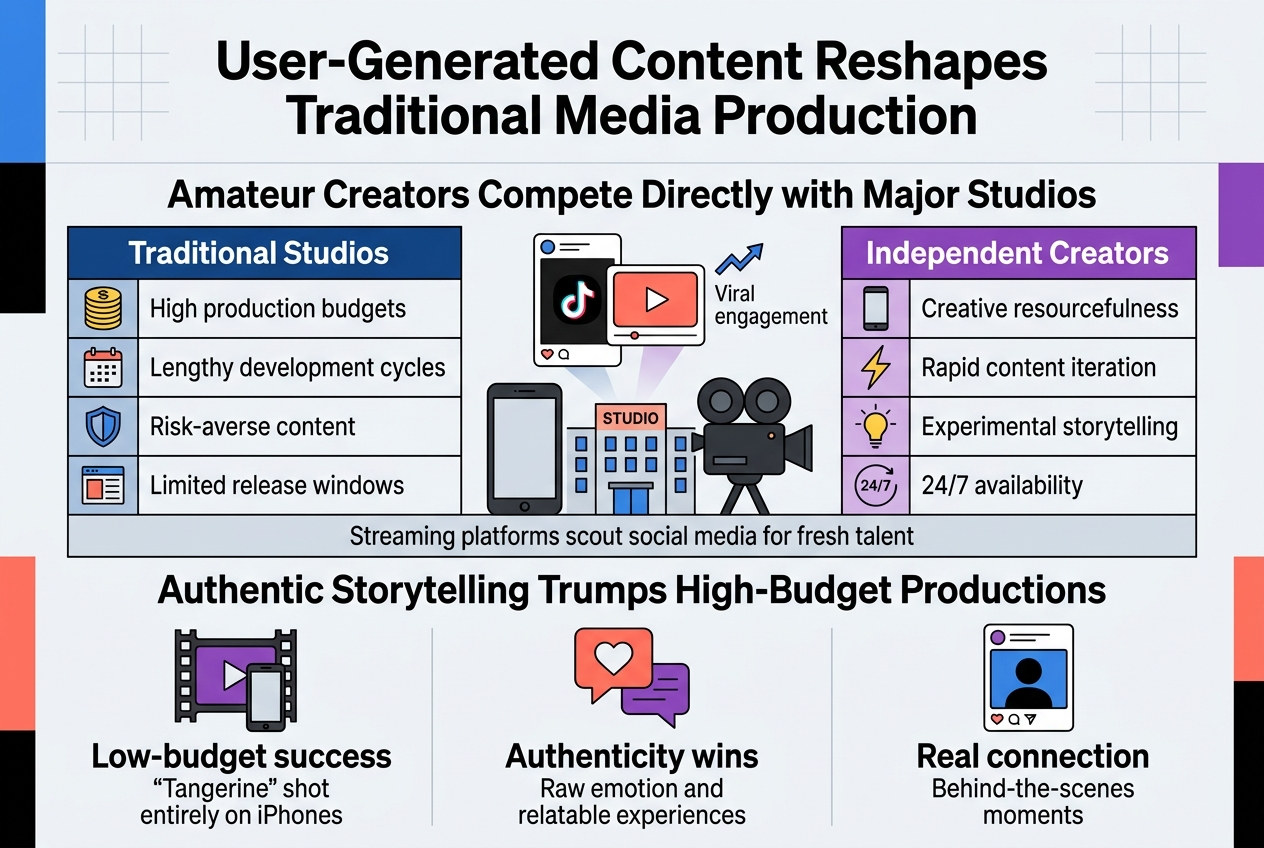
Independent filmmakers and content creators now stand toe-to-toe with Hollywood giants, armed with nothing more than smartphones and editing software. TikTok videos regularly outperform multi-million-dollar movie trailers in terms of engagement and cultural impact. YouTube creators like MrBeast produce content with production values that rival traditional television shows, often with budgets that would make network executives jealous.
The democratization of content creation tools has leveled the playing field dramatically. High-quality cameras, professional editing software, and distribution platforms are accessible to anyone with creative vision and determination. This shift has forced traditional studios to reconsider their monopoly on entertainment production.
| Traditional Studios | Independent Creators |
|---|---|
| High production budgets | Creative resourcefulness |
| Lengthy development cycles | Rapid content iteration |
| Risk-averse content | Experimental storytelling |
| Limited release windows | 24/7 availability |
Streaming platforms actively scout for fresh talent on social media, recognizing that viral content often translates to mainstream success. Netflix has greenlit series based on TikTok creators, while Disney+ has partnered with YouTube personalities to develop original content. The traditional gatekeepers of entertainment are now following trends set by bedroom producers and college students.
Authentic storytelling trumps high-budget productions
Audiences increasingly gravitate toward genuine, unpolished content over heavily produced entertainment. Raw emotion and relatable experiences resonate more powerfully than expensive special effects and celebrity cameos. This preference for authenticity has revolutionized storytelling approaches across all entertainment mediums.
The success of low-budget films like “Tangerine,” shot entirely on iPhones, demonstrates how compelling narratives can overcome technical limitations. Similarly, TikTok creators with zero formal training consistently outperform seasoned professionals because their content feels real and unfiltered.
Social media platforms reward genuine human connection over corporate polish. Videos showing behind-the-scenes moments, honest failures, and personal struggles often achieve higher engagement than carefully crafted marketing campaigns. This trend has pushed traditional media to adopt more authentic approaches, with major brands now deliberately incorporating “imperfect” elements to appear more relatable.
The shift toward authenticity reflects a broader cultural movement where audiences seek connection rather than aspiration. People want to see themselves reflected in the content they consume, leading to more diverse voices and perspectives gaining prominence in mainstream entertainment.
Influencers Transform Celebrity Culture and Star Power
Micro-influencers build dedicated entertainment communities
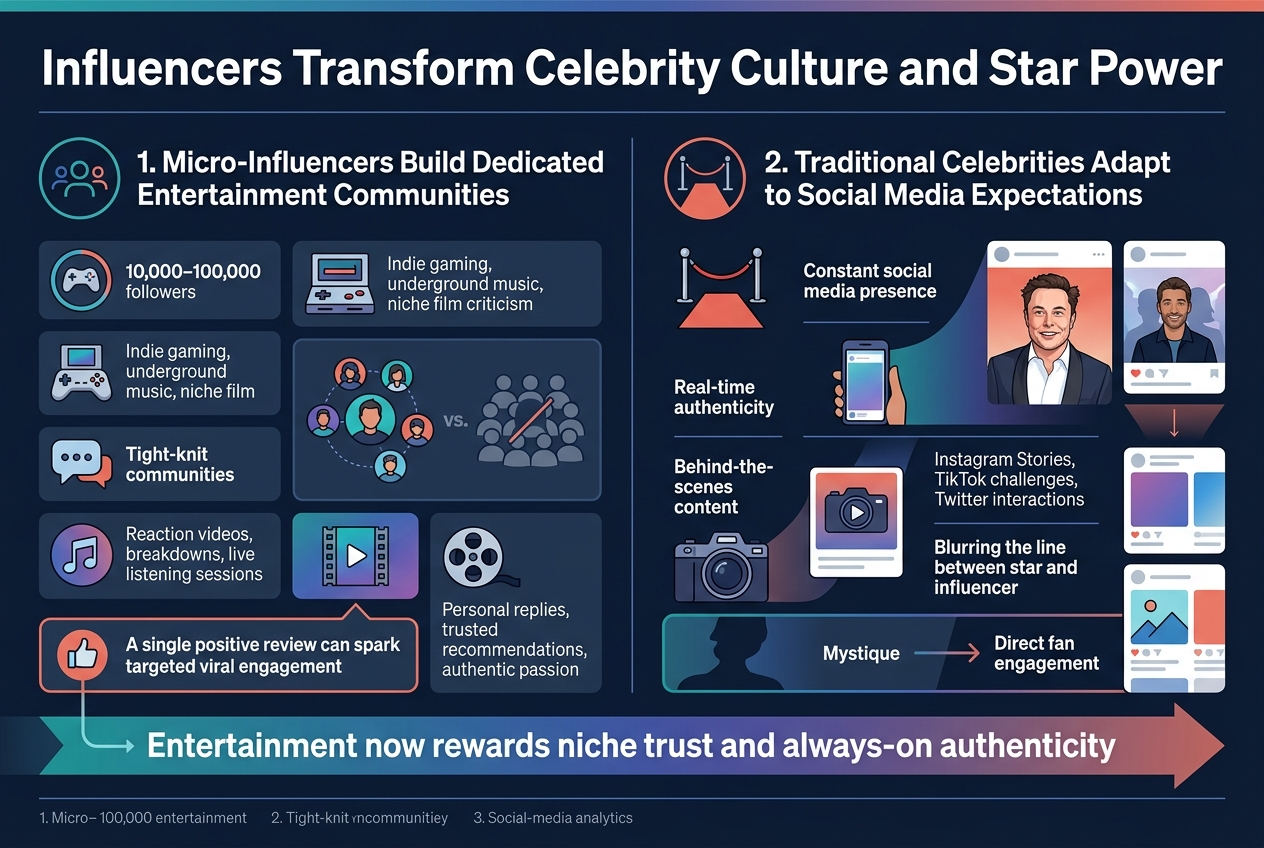
The entertainment landscape has shifted dramatically as micro-influencers carve out specialized niches that traditional media never could. These content creators, typically with follower counts ranging from 10,000 to 100,000, focus on specific entertainment genres like indie gaming, underground music, or niche film criticism. Their smaller audiences create tight-knit communities where every comment gets noticed and genuine conversations flourish.
Take gaming micro-influencers who stream retro games to dedicated audiences. They don’t need millions of followers because their community values authenticity and shared passion over mass appeal. These influencers often know their followers by username and respond personally to questions about gameplay strategies or hidden easter eggs. This intimacy creates loyalty that major entertainment brands struggle to replicate.
Music micro-influencers have transformed how we discover new artists. Instead of waiting for radio stations or streaming platforms to promote songs, these creators spotlight emerging musicians through reaction videos, breakdown analyses, and live listening sessions. Their recommendations carry weight because followers trust their taste and expertise in specific genres.
The entertainment industry now actively courts these micro-influencers for early access to content, knowing their endorsement can spark viral moments within specific communities. A horror movie micro-influencer’s positive review can drive more targeted engagement than a celebrity tweet to millions of disinterested followers.
Traditional celebrities adapt to social media expectations
Hollywood stars and mainstream entertainers face unprecedented pressure to maintain constant social media presence. The days of carefully managed public appearances and scripted interviews have given way to expectations for real-time authenticity and direct fan engagement.
Established celebrities now compete with influencers who built their fame through social platforms. Stars like Ryan Reynolds have mastered this transition by adopting influencer-style humor and behind-the-scenes content that feels spontaneous rather than produced by publicity teams. His Twitter presence mirrors the conversational tone that made social media influencers successful.
The traditional celebrity playbook has been rewritten. Red carpet appearances and magazine covers still matter, but fans expect immediate access through Instagram Stories, TikTok challenges, and Twitter interactions. Celebrities who resist this shift often see their relevance fade as audiences gravitate toward stars who embrace social media culture.
Many traditional entertainers struggle with this balance between maintaining mystique and meeting transparency expectations. Some hire social media managers to mimic authentic voice, while others like Dolly Parton have found success by genuinely embracing platform culture while staying true to their established personas.
The most successful traditional celebrities now blur the line between star and influencer, creating content that satisfies both their established fan base and social media-native audiences who expect consistent, engaging digital presence.
Real-Time Engagement Changes Audience Participation
Live streaming creates interactive entertainment experiences
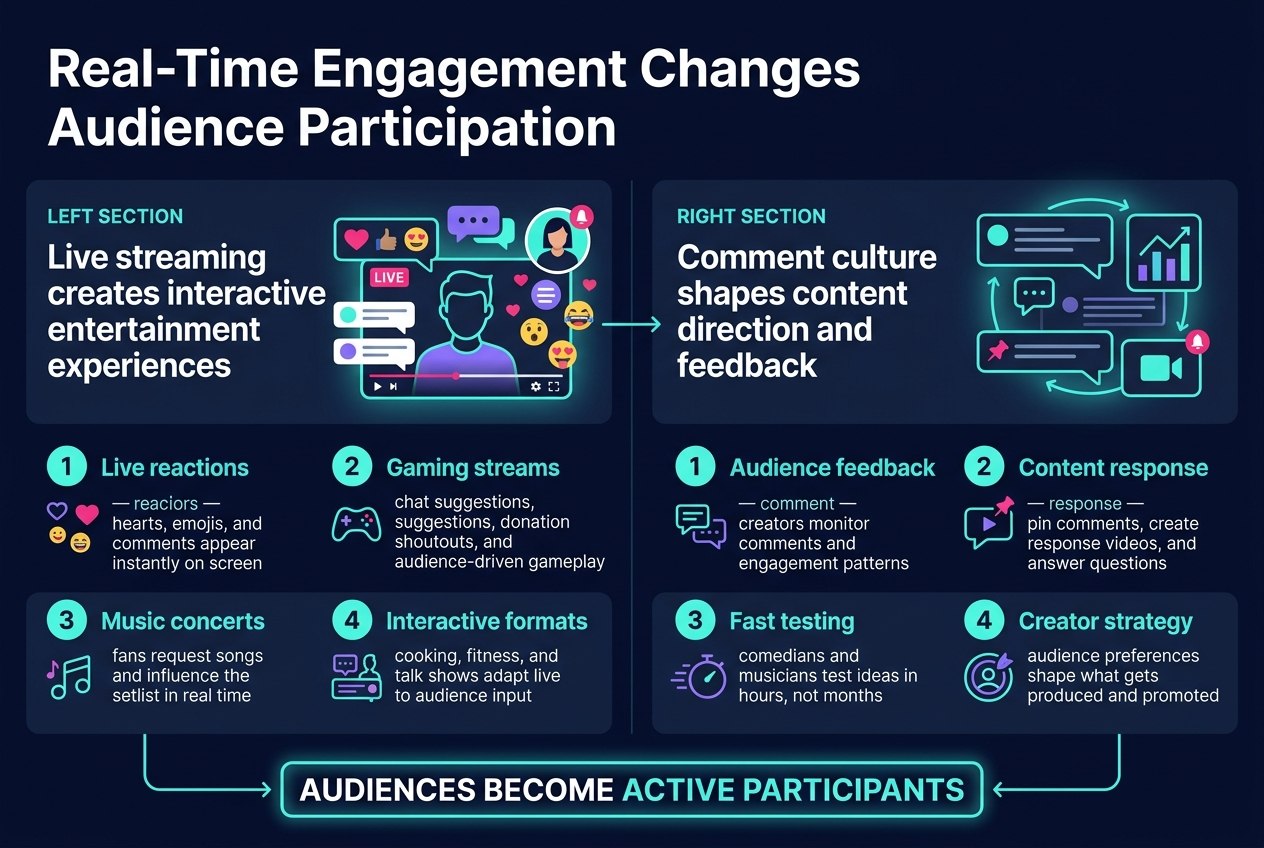
Social media platforms have completely transformed how audiences connect with content creators through live streaming technology. Twitch, YouTube Live, Instagram Live, and TikTok Live have turned passive viewers into active participants in real-time entertainment experiences. When someone goes live, viewers can instantly react through hearts, emojis, and comments that appear on screen, creating a dynamic conversation between creator and audience.
Gaming streams exemplify this shift perfectly. Streamers respond to chat messages while playing, taking suggestions for their next move or reacting to donations with personalized shoutouts. This creates a sense of community where viewers feel they’re part of the experience rather than just watching it unfold. Music artists now host virtual concerts where fans request songs, share reactions, and even influence setlist decisions in real time.
The immediacy of live interaction has birthed entirely new entertainment formats. Cooking streams let viewers suggest recipe modifications mid-preparation. Fitness instructors adjust workout intensity based on participant feedback. Talk show hosts pivot conversations based on live audience questions flooding the chat. This level of responsiveness was impossible with traditional media formats where content was pre-recorded and broadcast without audience input.
Comment culture shapes content direction and feedback
The comment sections on social media platforms have evolved into powerful tools that directly influence content creation and entertainment direction. Creators now monitor comment patterns, engagement metrics, and audience feedback to make real-time adjustments to their content strategy. A viral comment can spark an entire series of follow-up videos, while negative feedback might cause creators to abandon certain content directions entirely.
YouTube creators often pin top comments or create response videos addressing popular viewer suggestions. TikTok’s comment-to-video feature allows creators to transform audience questions into new content instantly. This feedback loop creates a collaborative content creation process where audiences become unofficial co-producers. Successful entertainers have learned to read these digital tea leaves, adapting their personas and content themes based on what resonates most strongly with their communities.
The speed of this feedback cycle has compressed traditional focus group testing into real-time audience research. A comedian can test new material through short-form videos and gauge reactions within hours instead of months. Musicians share song snippets to measure audience interest before committing to full productions. This democratized feedback system has flattened the traditional gatekeeping structure of entertainment, allowing audience preferences to directly shape what gets produced and promoted across all major entertainment platforms.
Data Analytics Predict and Shape Entertainment Preferences
Viewing patterns inform content creation strategies
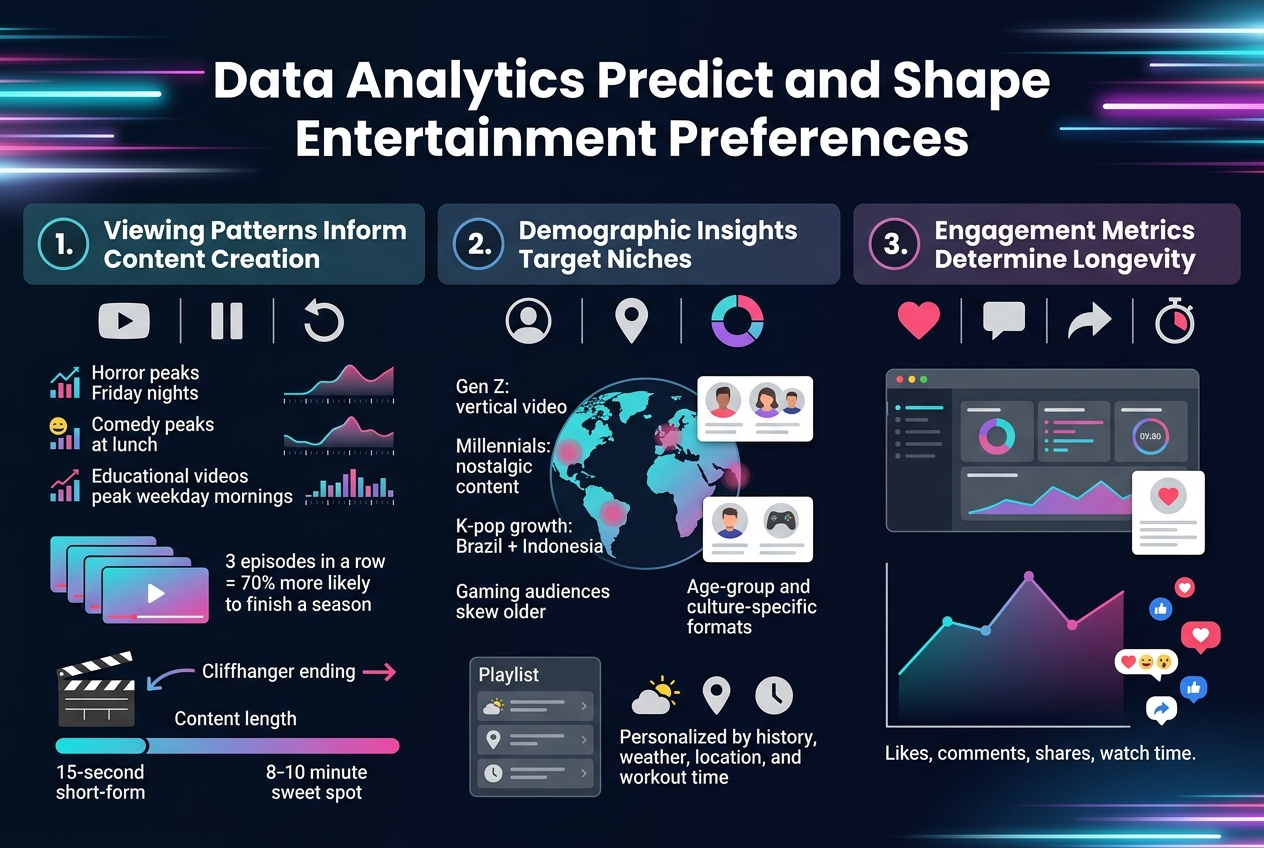
Entertainment companies now track every click, pause, and replay to understand exactly what keeps audiences glued to their screens. Netflix famously canceled shows after analyzing completion rates, while YouTube creators adjust their content based on audience retention graphs that show precisely when viewers lose interest. These viewing patterns reveal fascinating insights – horror movies perform better on Friday nights, comedy content peaks during lunch hours, and educational videos see higher engagement on weekday mornings.
Streaming platforms collect data on binge-watching behaviors, discovering that viewers who watch three episodes in a row are 70% more likely to finish an entire season. This knowledge shapes how creators structure their storytelling, leading to cliffhanger endings and compressed narrative arcs designed to trigger the next episode autoplay. Even the length of content gets optimized – TikTok’s success with 15-second videos pushed other platforms to develop shorter formats, while long-form content creators learned that the 8-10 minute sweet spot maximizes both engagement and ad revenue.
Production companies now greenlight projects based on data models that predict success rates before a single scene gets filmed. They analyze which genres perform well in specific regions, what character types resonate with target demographics, and even which actors have the strongest correlation with viewership numbers.
Demographic insights target specific entertainment niches
Social media platforms possess incredibly detailed demographic profiles that make traditional market research look primitive by comparison. Instagram knows that Gen Z users prefer vertical video content, while Facebook data reveals that millennials engage more with nostalgic content referencing their childhood. This granular demographic information allows entertainment creators to craft hyper-specific content for niche audiences that previously seemed too small to target profitably.
K-pop’s global explosion happened partly because streaming platforms identified passionate fan communities in unexpected markets like Brazil and Indonesia. Gaming content creators discovered through demographic analysis that their audiences skewed older than expected, leading to more sophisticated storytelling and production values. Dating show formats adapted after learning that different age groups prefer different relationship dynamics and cultural contexts.
Demographic targeting now reaches incredible specificity levels. Platforms can identify viewers who enjoy true crime documentaries, live in suburban areas, and have college-aged children – then serve them content about campus safety. Music streaming services create personalized playlists based not just on listening history, but on location data, weather patterns, and even the time of day users typically exercise.
Engagement metrics determine content longevity
The old model of entertainment success measured box office numbers or TV ratings weeks after release. Today’s entertainment landscape moves at lightning speed, with engagement metrics determining a content’s fate within hours or even minutes. A YouTube video’s performance gets evaluated in real-time through likes, comments, shares, and watch time, while TikTok’s algorithm can make or break a creator’s career based on engagement rates from their last few posts.
Comments sections have become focus groups that provide instant feedback on plot developments, character decisions, and creative choices. Smart creators monitor these conversations to understand what resonates with their audience and adjust upcoming content accordingly. Twitter reactions to TV show episodes now influence writers’ rooms, with some series incorporating fan feedback into storylines within the same season.
Engagement metrics also reveal the true lifespan of entertainment content. While traditional media followed predictable release cycles, social media content can experience multiple viral moments months or years after initial publication. Memes resurrect old songs, movie clips get repurposed into reaction GIFs, and forgotten TV shows find new audiences through fan communities that keep the engagement numbers climbing long after the original marketing campaigns ended.
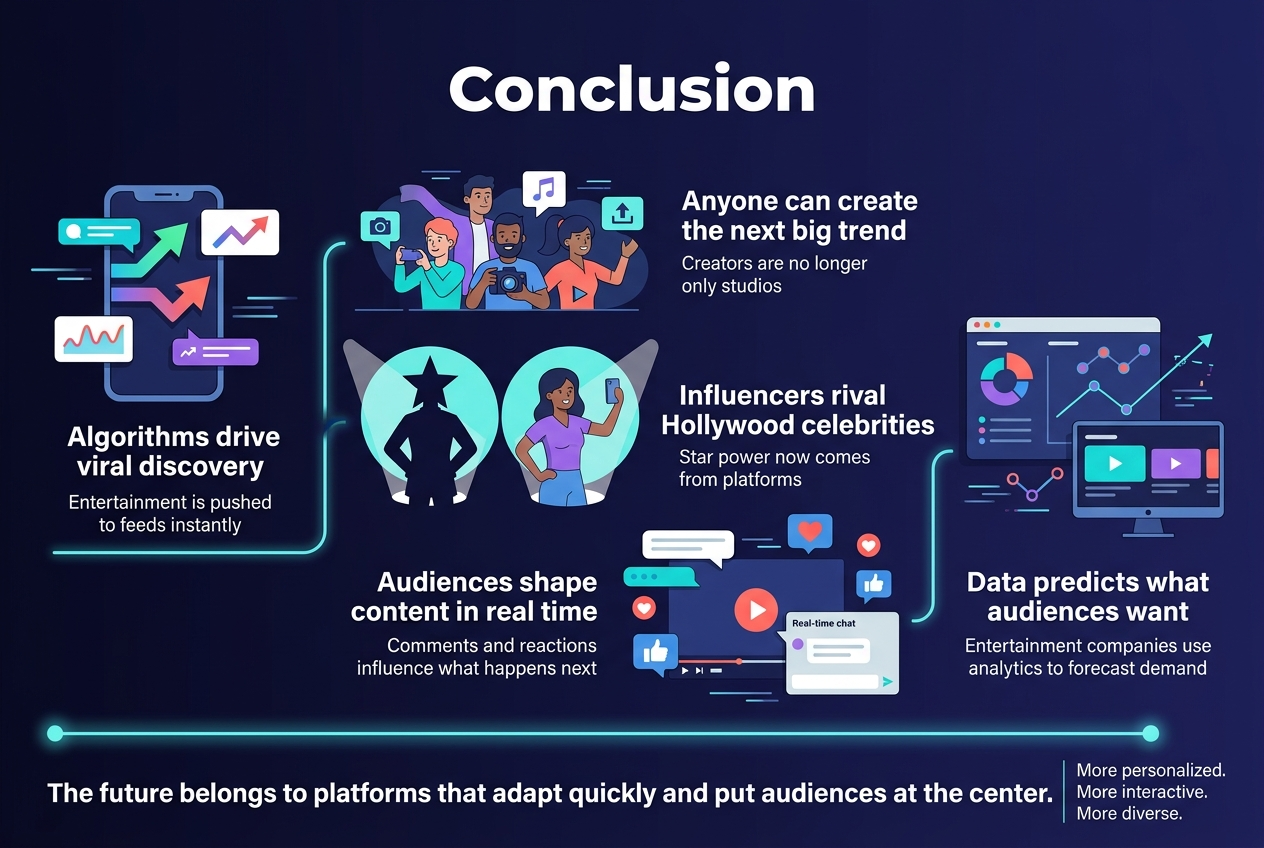
Social media platforms have completely transformed how we discover, consume, and interact with entertainment. From algorithms that push viral content to our feeds, to everyday users creating the next big trend, the traditional gatekeepers of entertainment are losing their grip. Influencers now wield the same star power as Hollywood celebrities, while real-time comments and reactions let audiences shape content as it happens. Behind the scenes, data analytics help entertainment companies predict what we’ll want to watch before we even know it ourselves.
The entertainment landscape will never go back to the way it was. As social platforms continue to evolve, the line between creator and consumer keeps blurring. If you’re in the entertainment industry, embracing these changes isn’t optional anymore – it’s survival. For the rest of us, we get to enjoy a more personalized, interactive, and diverse entertainment experience than ever before. The future belongs to platforms that can adapt quickly and put their audiences at the center of the conversation.