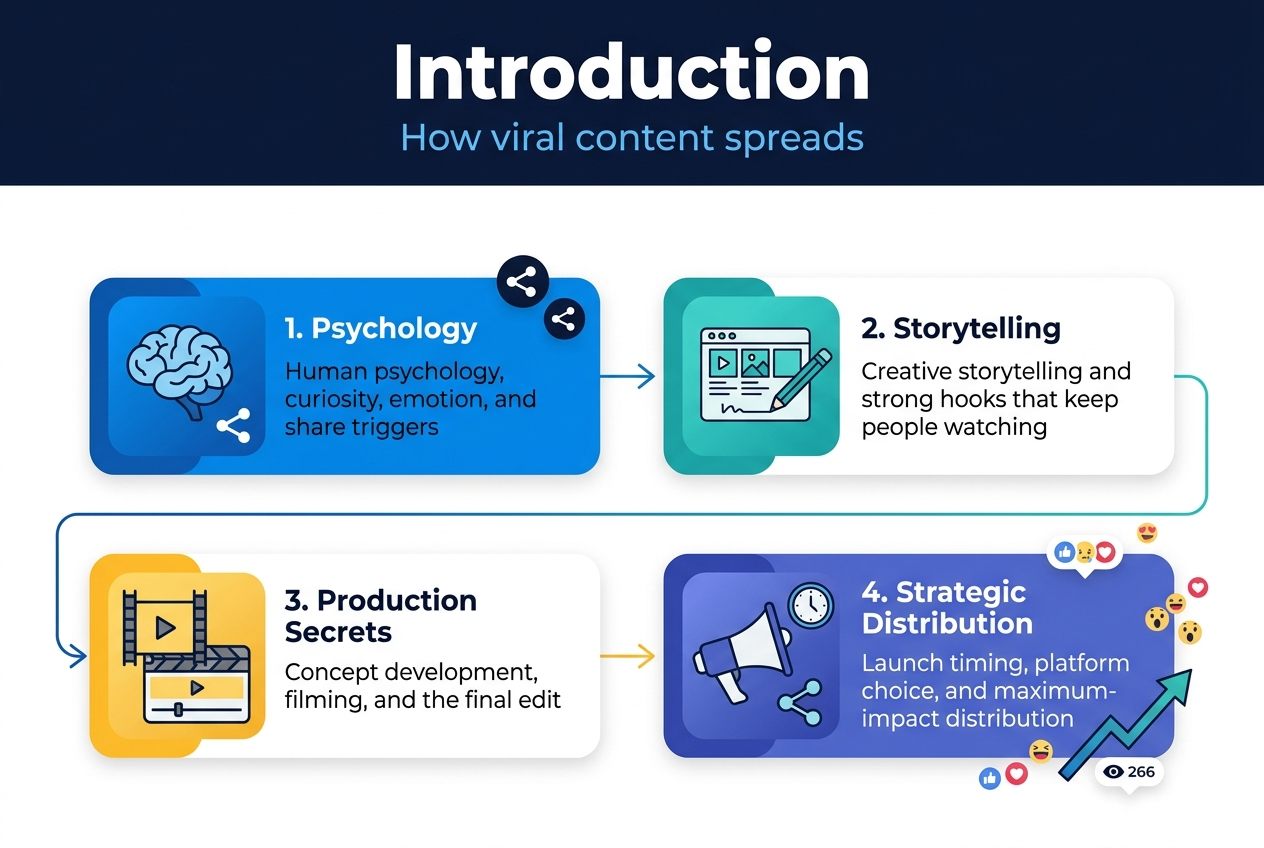
Ever wondered how that random video suddenly appears everywhere on your feed? Behind every piece of viral content lies a carefully crafted strategy that content creators, marketers, and social media managers use to capture millions of views.
Creating content that spreads like wildfire isn’t just luck—it’s a blend of understanding human psychology, creative storytelling, and smart timing. We’ll explore the psychology and patterns that make content irresistible to share, revealing what really hooks audiences and keeps them watching. You’ll also discover the production secrets behind successful viral campaigns, from concept development to the final edit that makes all the difference. Finally, we’ll break down the strategic distribution tactics that turn good content into internet sensations, including when and where to launch for maximum impact.
Understanding What Makes Content Go Viral
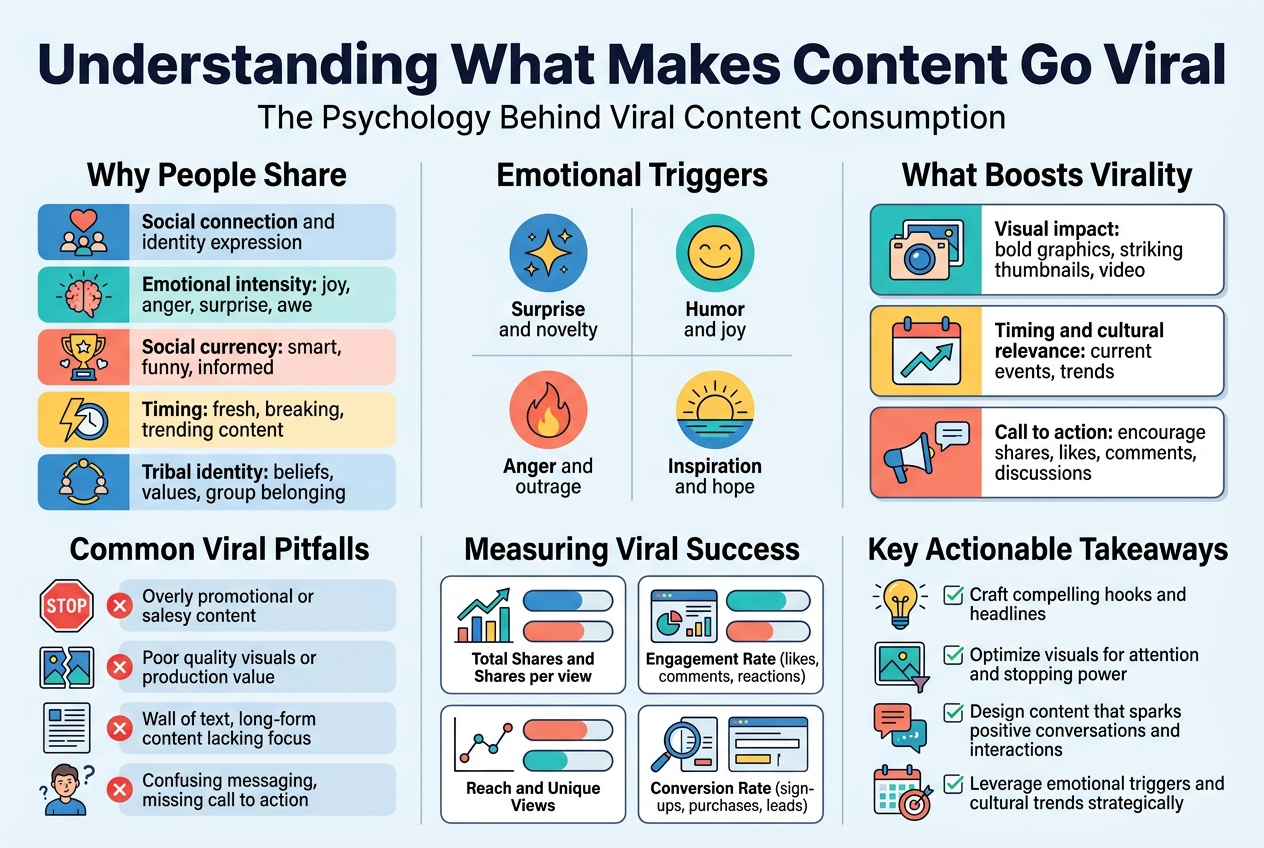
The Psychology Behind Viral Content Consumption
People share content for deeply personal reasons that tap into fundamental human behaviors. At its core, viral sharing fulfills our basic need for social connection and identity expression. When someone shares a video, meme, or article, they’re essentially saying “this represents who I am” to their network.
Emotional intensity drives sharing more than any other factor. Content that triggers strong feelings—whether joy, anger, surprise, or awe—compels people to spread it. The brain releases dopamine when we encounter emotionally charged material, creating a natural urge to share that experience with others. This explains why heartwarming reunion videos or outrageous news stories spread like wildfire across social platforms.
Social currency plays a major role in sharing decisions. People want to look smart, funny, or well-informed to their peers. They carefully curate what they share to maintain their desired image. A thought-provoking article makes someone appear intellectual, while a hilarious meme showcases their sense of humor.
The timing of when people encounter content matters enormously. Fresh, breaking news or trending topics ride waves of collective attention. People want to be first to share something new, positioning themselves as early adopters or trendsetters within their social circles.
Tribal identity also influences sharing patterns. Content that reinforces someone’s beliefs, values, or group membership gets shared to strengthen bonds with like-minded individuals while potentially challenging opposing viewpoints.
Key Elements That Trigger Mass Sharing
Successful viral content follows predictable patterns that creators can strategically implement. These elements work together to maximize sharing potential across diverse audiences.
Emotional triggers form the foundation of shareable content:
- Surprise and novelty: Unexpected twists, shocking revelations, or unique perspectives grab attention
- Humor and joy: Funny content provides social bonding opportunities and mood enhancement
- Anger and outrage: Controversial topics mobilize people to share their stance
- Inspiration and hope: Uplifting stories motivate people to spread positivity
Relatability and universality ensure broad appeal. Content that speaks to common human experiences—parenting struggles, work frustrations, relationship dynamics—resonates across demographic lines. The most viral content finds that sweet spot where millions of people think “that’s so me.”
Visual impact cannot be overlooked in our image-driven digital landscape. Eye-catching thumbnails, bold graphics, or striking photography stop scroll-happy users in their tracks. Video content consistently outperforms text-only posts because it delivers immediate visual engagement.
Timing and cultural relevance amplify sharing potential. Content that connects to current events, seasonal moments, or pop culture phenomena rides existing conversation waves. Brands and creators who can quickly respond to trending topics often see explosive growth.
Simplicity and clarity make content easily digestible and shareable. Complex messages get lost, while clear, concise content travels faster. The best viral content can be understood and appreciated within seconds of viewing.
Interactive elements encourage participation. Polls, challenges, questions, or calls-to-action transform passive viewers into active participants, increasing engagement and sharing likelihood.
The Creative Process of Viral Content Development
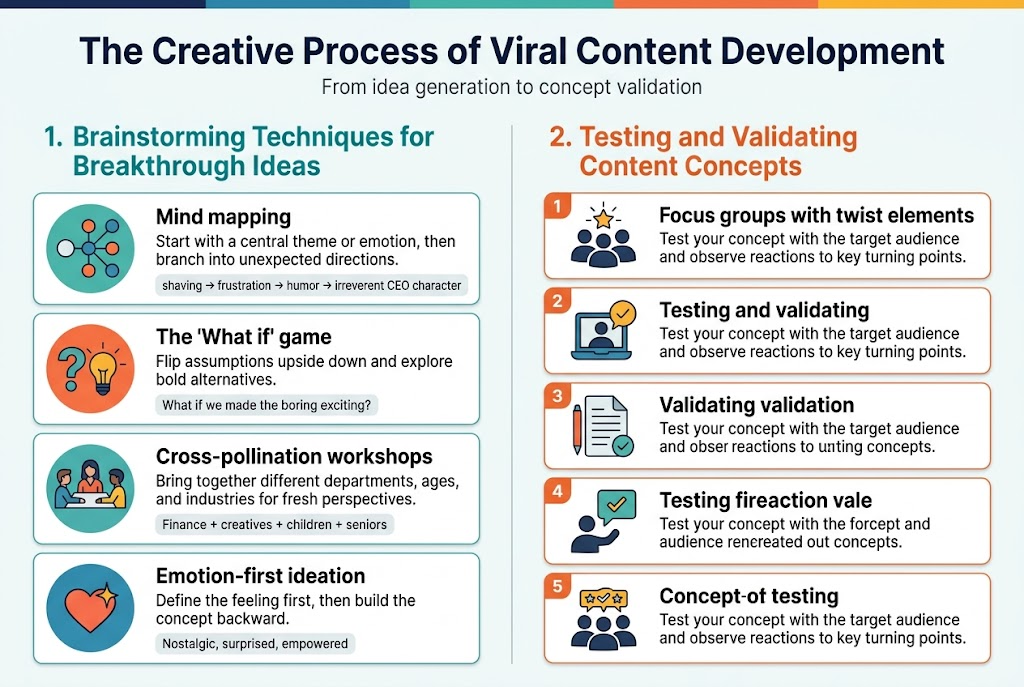
Brainstorming Techniques for Breakthrough Ideas
The magic of viral content starts with a spark—that lightning-in-a-bottle moment when an idea clicks. Top content creators don’t just wait for inspiration to strike; they use proven techniques to generate breakthrough concepts consistently.
Mind mapping remains one of the most powerful tools in the viral creator’s arsenal. Start with a central theme or emotion, then branch out into unexpected directions. The key is pushing past obvious connections. When brainstorming for Dollar Shave Club’s viral video, the team mapped “shaving” to “frustration,” then to “humor,” and finally to “irreverent CEO character”—a path that led to their game-changing campaign.
The “What if” game forces creators to flip assumptions upside down. What if we made the boring exciting? What if we told this story backward? What if our target audience was completely different? This technique helped create viral hits like Old Spice’s gender-bending marketing approach, targeting women to sell men’s products.
Cross-pollination workshops bring together people from different departments, backgrounds, or industries. A finance person’s perspective on a creative brief can unlock angles that pure creatives miss. Some agencies even invite children or seniors to brainstorming sessions—their unfiltered viewpoints often cut through conventional thinking.
Emotion-first ideation starts with the feeling you want to create, then works backward to the concept. Do you want people to feel nostalgic? Surprised? Empowered? Once you nail the emotional target, the content vehicle becomes clearer.
Testing and Validating Content Concepts
Even the most brilliant idea needs validation before investing significant resources. Smart creators test early and often, using multiple validation methods to predict viral potential.
Focus groups with twist elements go beyond traditional testing by including surprise factors. Show your concept to the target audience, but also test it on completely different demographics. Sometimes the most unexpected groups become your biggest amplifiers. A B2B software company discovered their serious explainer video resonated more with teenagers than business professionals, leading them to pivot their distribution strategy.
Social listening analysis helps validate whether your concept taps into existing conversations or creates new ones. Tools like Brandwatch or Mention can reveal if similar content themes are trending upward or losing steam. This data prevents you from launching yesterday’s viral concept tomorrow.
A/B testing frameworks for concepts involve creating multiple versions of your core idea with different angles, tones, or formats. Netflix famously tests dozens of thumbnail variations before settling on final artwork. Apply this same rigor to concept validation by creating mini-versions of your ideas and testing them across small audience segments.
Influencer feedback loops provide insider knowledge from people who understand viral mechanics. Before finalizing concepts, many successful brands share early ideas with micro-influencers in their space. These creators often spot potential viral elements or fatal flaws that traditional focus groups miss.
Speed validation techniques include rapid prototype testing on platforms like TikTok or Instagram Stories, where you can gauge immediate audience reaction without major production investment. A 15-second concept trailer can reveal audience appetite before committing to full production.
Production Secrets of Successful Viral Campaigns
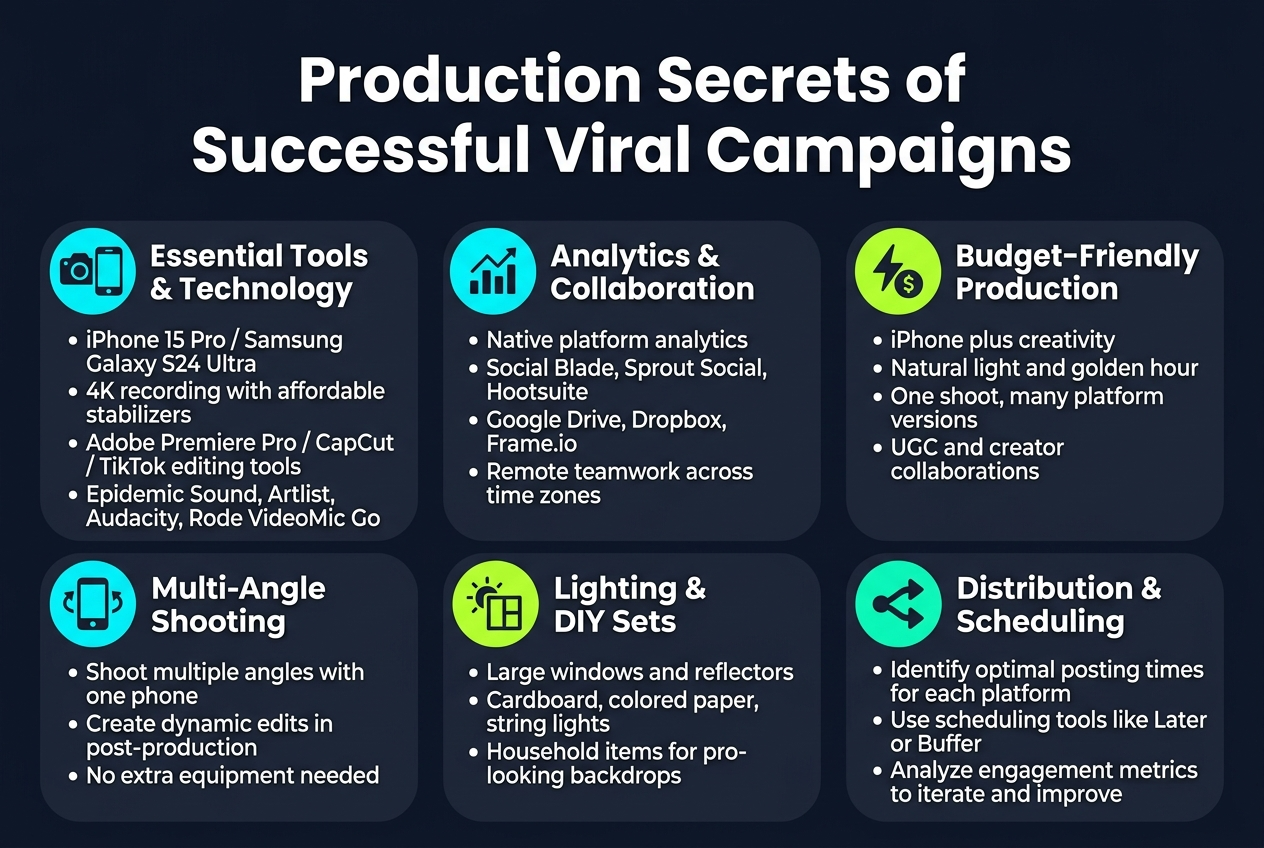
Essential Tools and Technology Used by Creators
The most successful viral content creators rely on surprisingly accessible technology. Professional-grade smartphones like the iPhone 15 Pro or Samsung Galaxy S24 Ultra have become the backbone of viral video production, offering 4K recording capabilities that rival expensive camera equipment. Creators pair these with affordable stabilizers like the DJI OM series or simple ring lights from Amazon to achieve broadcast-quality footage.
Editing software plays a crucial role in the magic. Adobe Premiere Pro remains the gold standard for professional editing, while CapCut has emerged as the go-to choice for mobile-first creators. TikTok’s built-in editing tools have actually produced some of the most viral content, proving that expensive software isn’t always necessary.
Sound design separates amateur content from viral hits. Creators use tools like Epidemic Sound or Artlist for royalty-free music, while Audacity handles basic audio cleanup. Many viral creators swear by external microphones like the Rode VideoMic Go or even simple lapel mics that cost under $30.
Analytics tools drive strategic decisions behind viral campaigns. Creators monitor performance using native platform analytics, but many supplement with tools like Social Blade, Sprout Social, or Hootsuite to track cross-platform metrics and identify optimal posting times.
Cloud storage and collaboration platforms like Google Drive, Dropbox, or Frame.io enable seamless teamwork. Many viral campaigns involve multiple creators or team members working remotely, making these tools essential for sharing raw footage, graphics, and coordinating releases across different time zones.
Budget-Friendly Production Techniques That Work
Smart creators maximize impact while minimizing costs through strategic resource allocation. The “iPhone plus creativity” approach has produced countless viral hits. Creators shoot multiple angles using just their phone, then combine footage in post-production to create dynamic, multi-camera appearances without additional equipment costs.
Natural lighting remains the most cost-effective solution for high-quality visuals. Golden hour shooting provides professional-looking footage without expensive lighting rigs. Indoor creators position themselves near large windows or use simple white poster boards as reflectors, creating studio-quality lighting for under $10.
Repurposing content across platforms maximizes production value. Successful creators film one piece of content but edit multiple versions optimized for different platforms. A single filming session might produce a long-form YouTube video, several TikTok clips, Instagram Reels, and Twitter content, multiplying return on investment.
User-generated content (UGC) strategies reduce production costs while increasing engagement. Creators launch challenges or trends that encourage audience participation, essentially crowdsourcing content creation. This approach not only saves money but often generates more authentic, relatable content that resonates better with audiences.
Collaboration between creators splits costs and combines audiences. Cross-promotion partnerships allow creators to share equipment, locations, and production resources while accessing each other’s follower base. These collaborations often produce viral content because they bring together different creative styles and audiences.
DIY props and sets using household items or inexpensive materials create professional-looking productions. Cardboard, colored paper, string lights, and basic craft supplies can transform ordinary spaces into engaging backdrops. Many viral cooking videos use simple kitchen setups with strategic camera angles rather than expensive studio kitchens.
Strategic Distribution and Launch Tactics
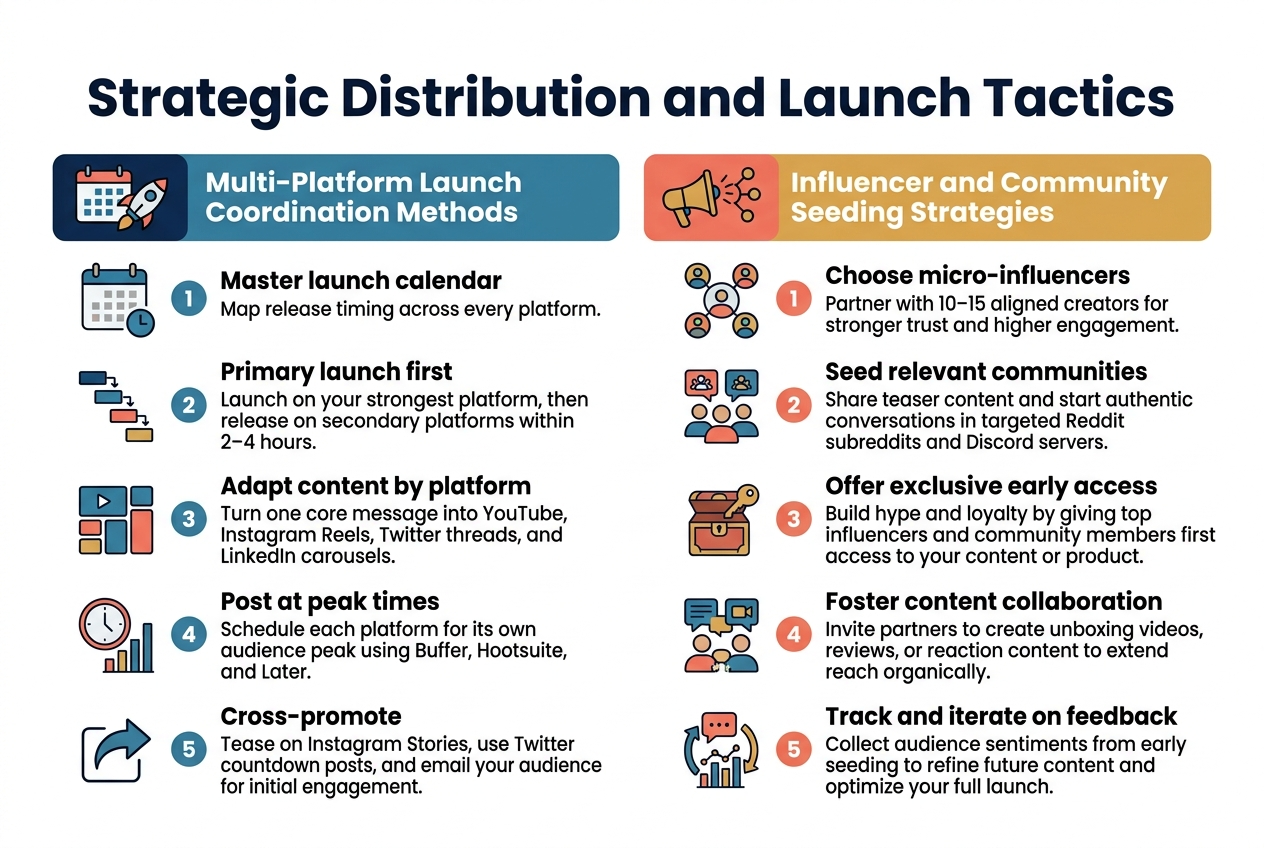
Multi-Platform Launch Coordination Methods
Successful viral content doesn’t just happen by accident – it requires precise coordination across multiple platforms to maximize reach and engagement. Content creators and marketing teams who master this approach understand that each platform has its own unique audience behaviors, optimal posting times, and content formats.
The key starts with creating a master launch calendar that maps out when content will go live on each platform. Most viral successes begin with a primary platform launch, typically where the creator has their strongest following, followed by strategic releases on secondary platforms within 2-4 hours. This staggered approach prevents audience overlap fatigue while maintaining momentum.
Platform-specific optimization plays a crucial role in coordination success. What works on TikTok won’t necessarily perform well on LinkedIn. Smart creators adapt their core message for each platform’s format – turning a long-form YouTube video into bite-sized Instagram Reels, Twitter threads, and LinkedIn carousel posts. The messaging remains consistent, but the presentation shifts to match user expectations.
Timing coordination requires deep understanding of when each platform’s audience is most active. Data shows that cross-platform launches work best when the primary release happens during peak engagement hours, with follow-up posts scheduled for each platform’s individual peak times. Tools like Buffer, Hootsuite, and Later help automate this complex scheduling while maintaining the personal touch that audiences crave.
Cross-promotion between platforms amplifies the viral effect. Successful creators tease upcoming content on Instagram Stories, create countdown posts on Twitter, and use their email lists to drive initial engagement that signals to algorithms that the content deserves wider distribution.
Influencer and Community Seeding Strategies
Smart content creators know that organic reach alone isn’t enough to achieve viral status. Strategic seeding through influencers and communities acts as the initial spark that ignites widespread sharing and engagement.
Micro-influencers often provide better seeding value than mega-influencers for viral content. Their audiences trust their recommendations more deeply, leading to higher engagement rates and more authentic shares. The sweet spot typically involves partnering with 10-15 micro-influencers who align with your content’s theme rather than one large influencer who might generate views but not meaningful engagement.
Community seeding requires understanding where your target audience naturally gathers online. Reddit communities, Facebook groups, Discord servers, and niche forums each have their own cultures and sharing etiquette. Successful viral campaigns identify 5-7 relevant communities and craft platform-appropriate versions of their content for each space.
The timing of community seeding matters enormously. Posting in communities when moderators and active members are online increases the chances of early engagement, which signals quality to other community members. Most successful viral content receives its initial community boost within the first hour of posting.
Relationship building precedes successful seeding campaigns. Content creators who consistently engage with communities, provide value, and build genuine relationships find much greater success when they share their own content. This approach takes months to develop but pays dividends when launch time arrives.
Employee advocacy and personal networks shouldn’t be overlooked as seeding strategies. Team members, friends, and family can provide the crucial first wave of engagement that algorithms use to determine content quality. Coordinating this initial push requires clear communication about timing and engagement guidelines to appear natural rather than orchestrated.
Measuring and Optimizing Viral Performance
Key Metrics That Predict Viral Potential
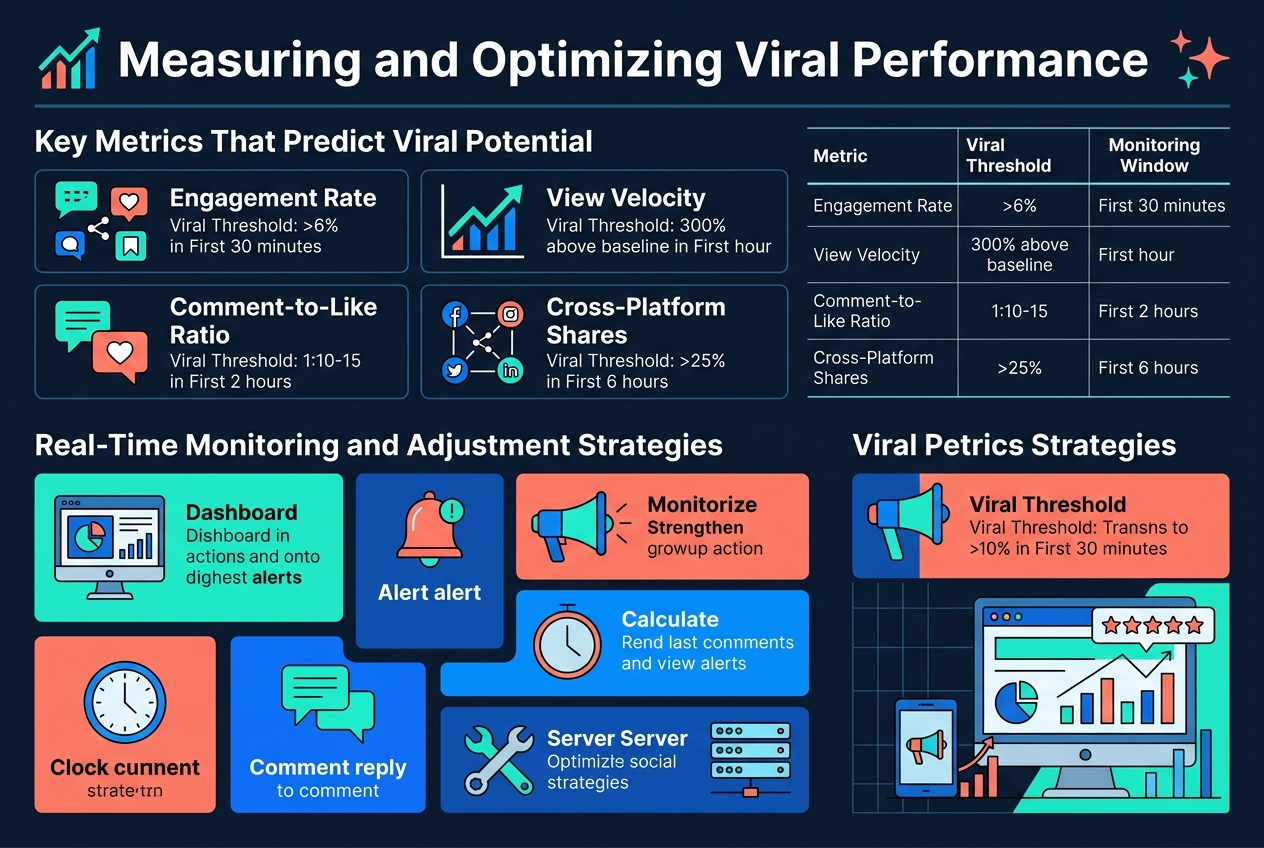
The magic of viral content lies in understanding which metrics actually matter before your content takes off. Engagement rate stands as the most reliable predictor – when people comment, share, and save within the first few hours, you’re onto something special. Watch for engagement rates above 6% in the initial 30 minutes, as this often signals viral potential.
Velocity metrics tell the real story. Track how quickly your content accumulates views, shares, and comments compared to your baseline performance. Content that gains 300% more engagement than usual within the first hour has strong viral indicators.
Comments-to-likes ratios reveal emotional impact. Viral content typically generates one comment for every 10-15 likes, showing people feel compelled to respond. Monitor sentiment analysis tools to gauge whether reactions are positive, negative, or controversial – all can drive virality.
Cross-platform sharing patterns matter enormously. When content jumps from Instagram to Twitter to TikTok organically, you’re witnessing viral momentum. Track hashtag performance and user-generated variations of your content.
| Metric | Viral Threshold | Monitoring Window |
|---|---|---|
| Engagement Rate | >6% | First 30 minutes |
| View Velocity | 300% above baseline | First hour |
| Comment-to-Like Ratio | 1:10-15 | First 2 hours |
| Cross-Platform Shares | >25% | First 6 hours |
Real-Time Monitoring and Adjustment Strategies
Smart content creators never set and forget. Real-time monitoring tools like Hootsuite Insights, Sprout Social, or native platform analytics become your command center during potential viral moments. Set up alerts for sudden spikes in engagement, mentions, or traffic.
The first six hours are critical. If your content shows early viral signs, amplify strategically. Boost high-performing posts with paid promotion, engage with every comment to maintain momentum, and cross-post to other platforms while the wave is building.
Timing adjustments can make or break viral potential. If your content performs well but plateaus, try reposting with different captions, hashtags, or at peak audience hours. Instagram content that starts strong at 2 PM might explode when shared again at 7 PM.
Community management becomes your secret weapon. Respond to comments within minutes, not hours. Pin top comments that add value, and don’t shy away from controversy if it drives meaningful discussion. The algorithm rewards active conversations.
Technical optimization happens on the fly. If your website crashes from viral traffic, have backup hosting ready. Optimize load times, ensure mobile responsiveness, and prepare landing pages for traffic surges. Nothing kills viral momentum like broken links or slow-loading content.
Learning from Failed Attempts to Improve Future Content
Every failed viral attempt teaches valuable lessons. Analyze why content didn’t take off by examining timing, messaging, audience alignment, and format choices. Content that receives low engagement often signals mismatched expectations between creator and audience.
Pattern recognition separates good creators from great ones. Keep a failure log documenting what didn’t work: specific hashtags, posting times, content formats, or topics that consistently underperform. This database becomes your guide for future content decisions.
Audience feedback provides the most honest insights. Comments like “this feels forced” or “I don’t get it” reveal gaps between your vision and audience perception. Exit surveys and direct messages often contain gold nuggets about why content missed the mark.
A/B testing failures reveals winning formulas. Test different versions of the same concept – various headlines, thumbnails, or opening lines. Failed versions show what doesn’t resonate, while successful ones highlight winning elements to replicate.
Competitor analysis of failed content offers perspective. Study what didn’t work for others in your niche. Failed trends, overused formats, or saturated topics become clear warning signs for your own content strategy.
Document emotional reactions to failures. Did you feel the content was authentic? Were you excited to share it yourself? Often, creators sense when something isn’t quite right but publish anyway. Trust those instincts and refine until the content genuinely excites you.
Creating viral content isn’t just about luck or throwing something at the wall and hoping it sticks. The most successful viral campaigns combine deep audience insights, carefully crafted creative elements, and smart production techniques that grab attention from the first second. Whether it’s understanding the psychology behind why people share content or mastering the technical aspects of video production, there’s real strategy behind those seemingly spontaneous hits that flood your social feeds.
The magic really happens when creators nail the timing and distribution game. Launching content at the right moment, on the right platforms, with the right messaging can turn a good piece of content into a global phenomenon. But the work doesn’t stop there – tracking performance, learning from what works, and constantly tweaking your approach is what separates the one-hit wonders from the creators who consistently produce shareable content. If you want to break through the noise, start treating viral content creation like the strategic art form it truly is, and remember that behind every “overnight success” are countless hours of planning, testing, and refinement.